We captured a filaprom!

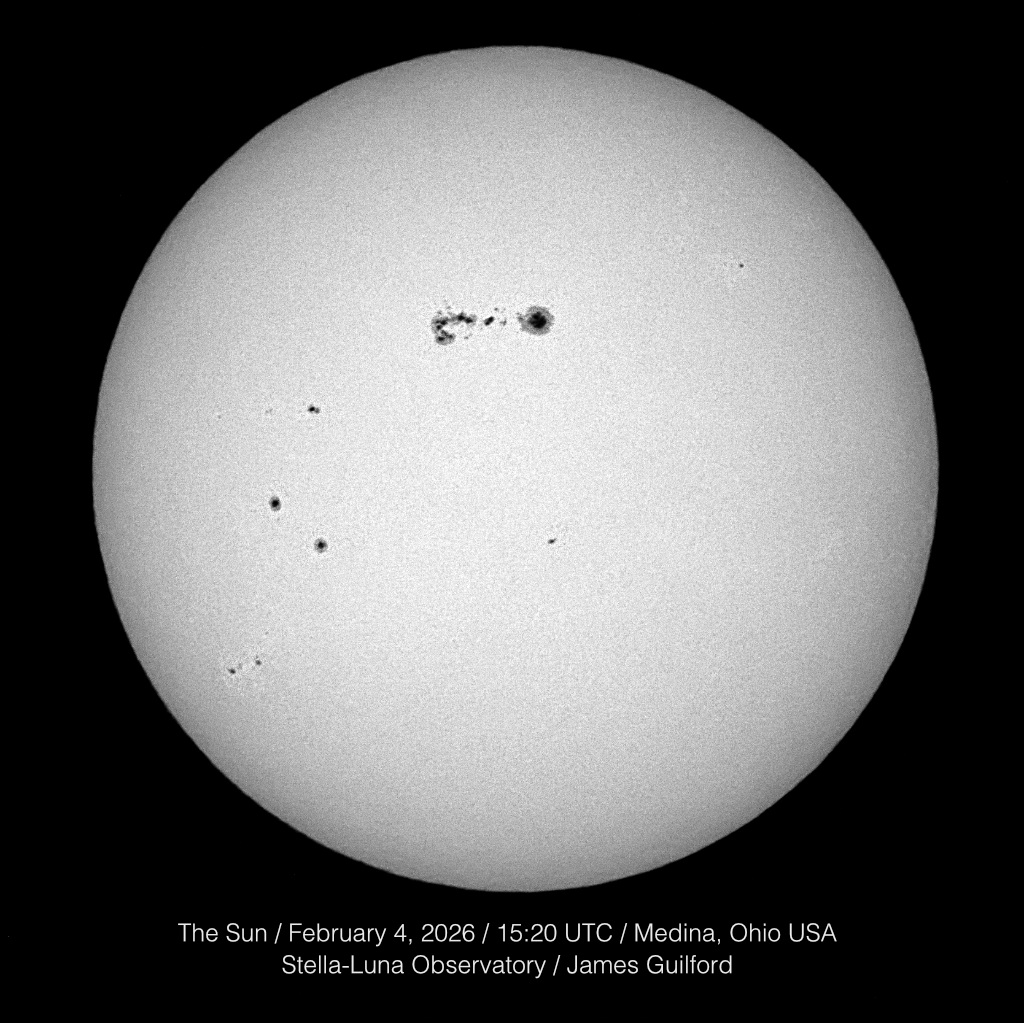
Shown in white light is our Sun as it appeared on February 4, 2026. A large sunspot, designated Active Region 4366, drew much attention as it transited the surface, issuing flares along the way.

On sunny days, this winter, when it’s not bone-shatteringly cold, we’ve been imaging Sun. In white light, we’ve tracked the progress of a couple of impressively-large sunspots as they traversed the Solar photosphere, including one designated Active Region 4366 that drew global attention in late January and early February 2026. We’ve also been observing in hydrogen-alpha (Ha) light.
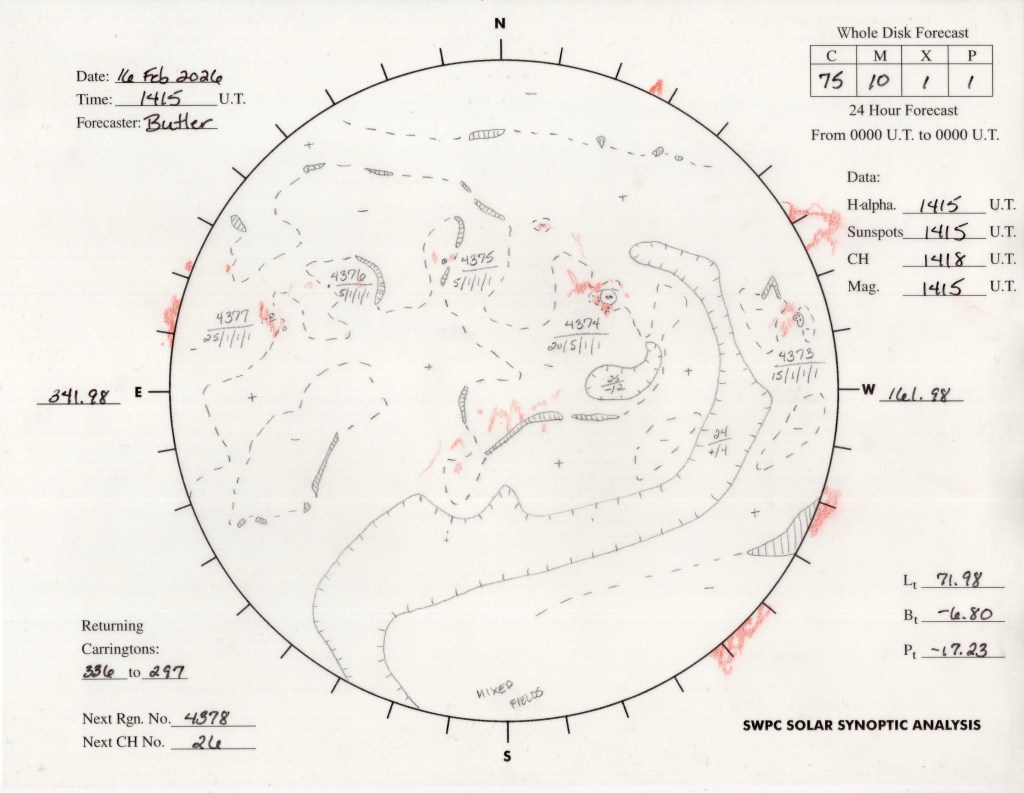
The NOAA SWPC Solar Synoptic Analysis map showing Sun on February 16, 2026.

On sunny February 16, we checked the NOAA Space Weather Prediction Center’s daily Synoptic Analysis map for targets of interest. Yes! The map indicated several prominences around Sun’s rim so, a great day to see what was out there.
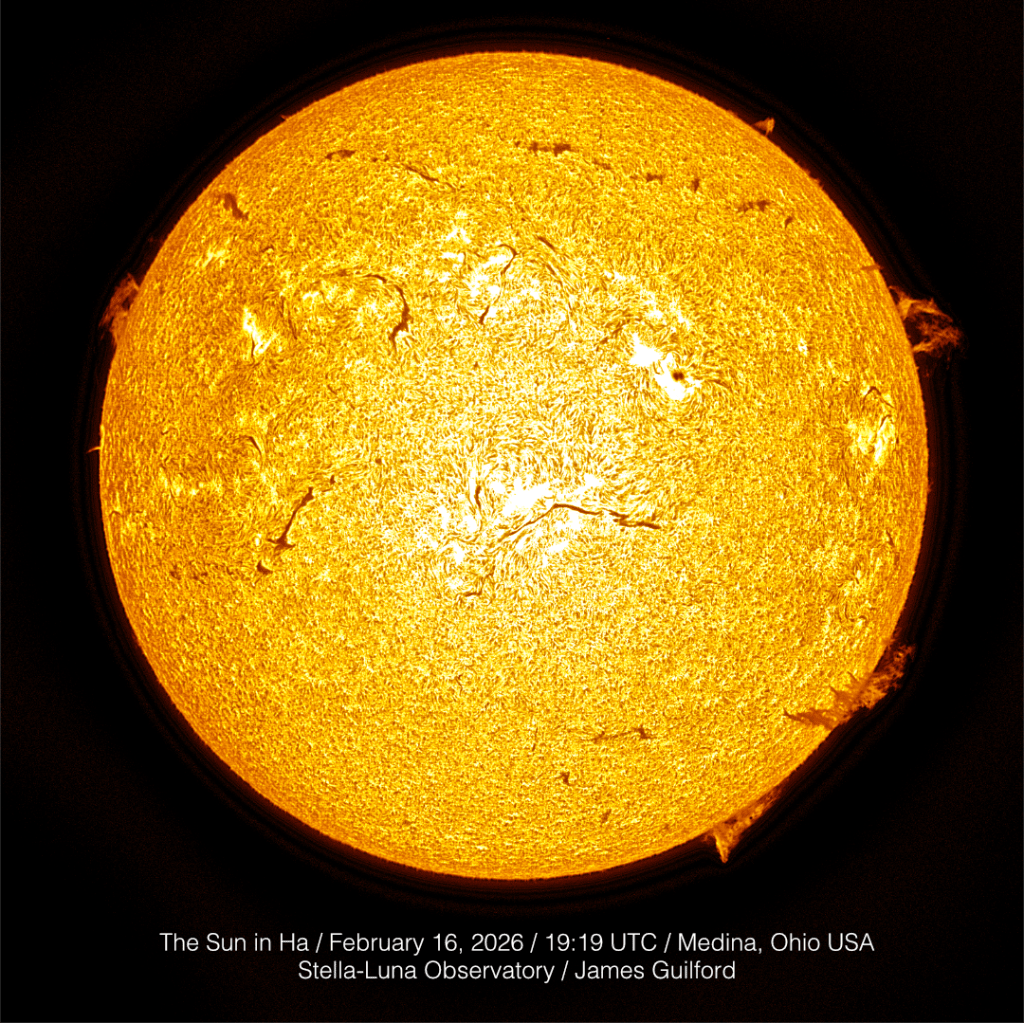
The full-disk image of Sun as it appeared in hydrogen-alpha light. This is a monochrome image original with false color applied. The “filaprom” is located at about the four o’clock position on the disk.

While an arch-shaped prominence at about the two o’clock position was our original target, as soon as we looked through the telescope’s eyepiece we saw it — a filaprom! What’s that? The snake-like features that appear in Ha are called filaments. If a filament bridges the Solar limb, its true nature is revealed: it’s a prominence, appearing as a dark filament when viewed against the bright chromosphere, and as a bright prominence when contrasted against the blackness of space — a filaprom! It was a first for us and delightful to observe!
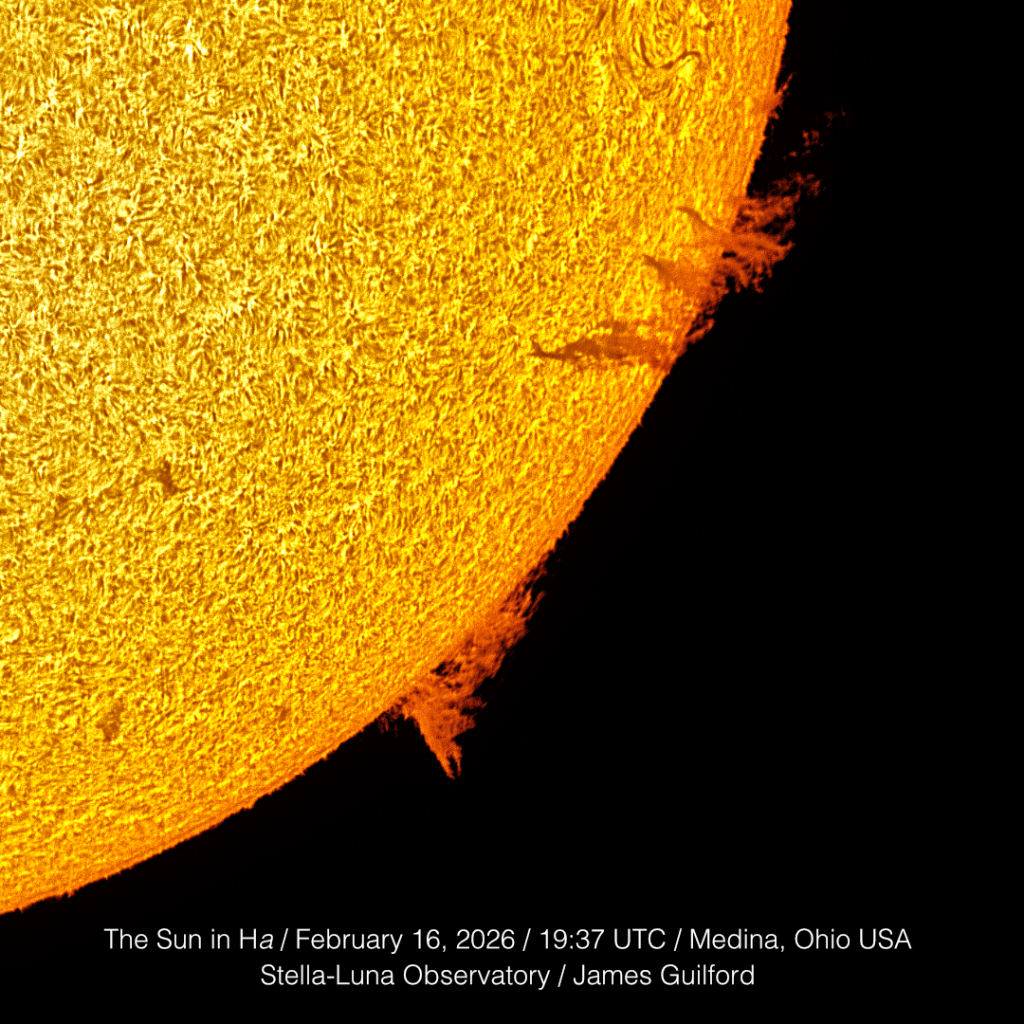
Close-up view of the filaprom, near the top of the arc. Lower on the curve is a prominence issued from a position just over the Solar limb. Near the left-hand portion of the frame is a filament feature — a prominence viewed against the bright Solar chromosphere.

Improvements in instrumentation and processing skills helped with both the capture and depiction of our nearest star’s activities. We recently upgraded to the relatively-new Sky-Watcher Heliostar 76Ha telescope and that has made a huge difference in visualizing the chromosphere. The telescope’s filtering system, with a “single-stack” arrangement, is capable of 0.5 Angstrom or better which really brings out detail — stronger image “signal” produces image data that are easier to process and edit. More about the telescope another time.
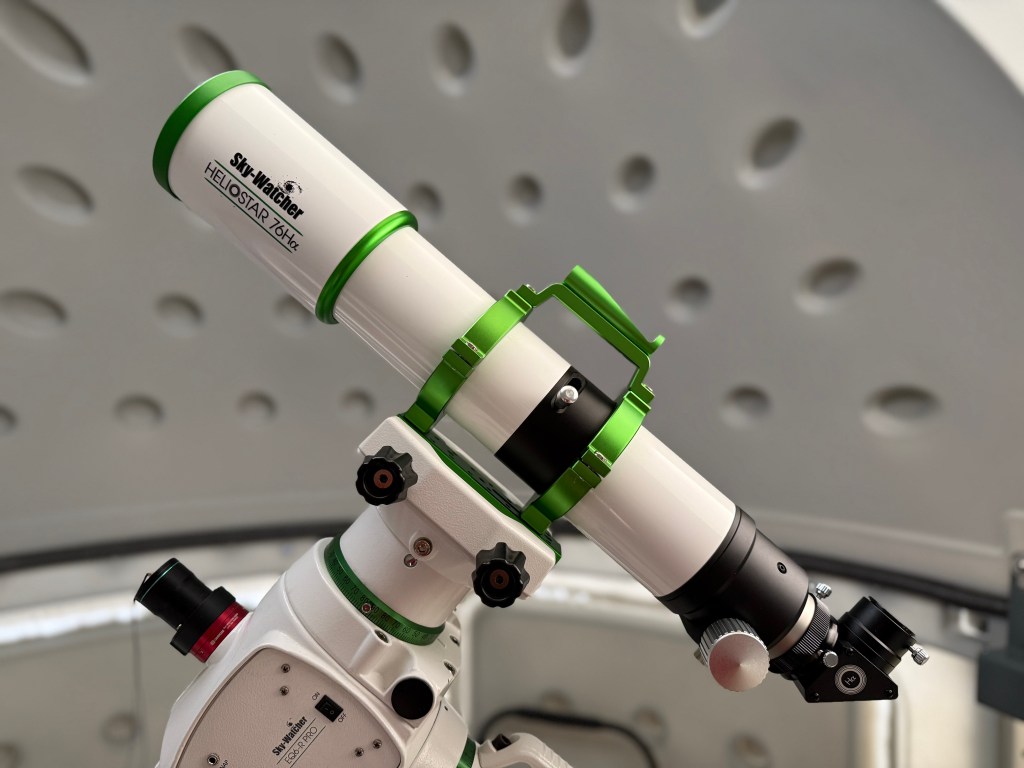
The Sky-Watcher Heliostar 76Ha telescope in its parked position beneath the observatory dome.

Recent Solar adventures

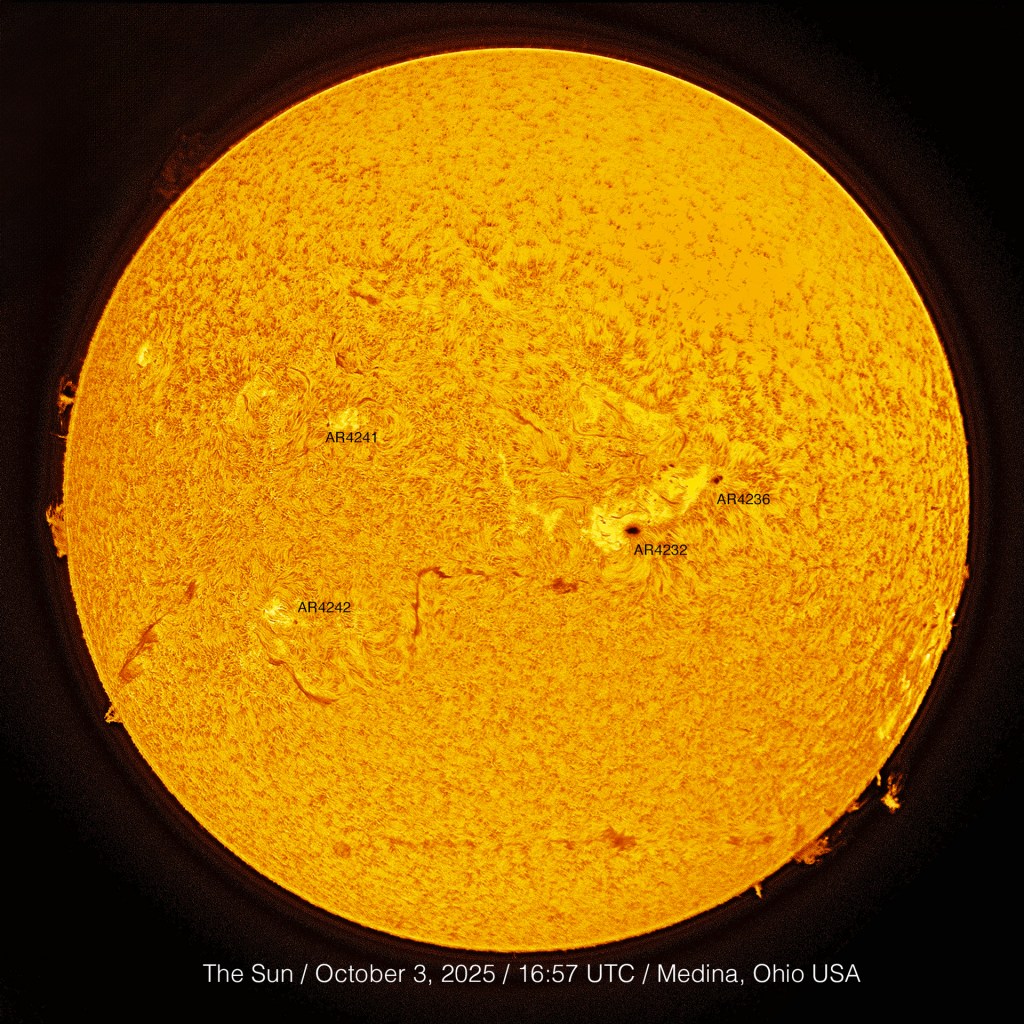
October 3, 2025 — We had been having quit a lot of trouble lately, recording data and reproducing images of Sun with prominences. There was some early success but even those images were a struggle to produce. Taking a look at suggested camera settings found in an article on solar imaging, one thing stood out — gain! We had nudged the camera’s gain setting upward and that’s not helpful and certainly not recommended; the setting should be very low or even zero! A few adjustments in data capture parameters was all it took to make a big difference in image processing and results!

Sun’s northeast quadrant, as recorded in hydrogen-alpha light. Visible are several filaments, as three prominences appear along the star’s limb. The “peach fuzz” appearance of the edge of the solar disk is caused by the presence of innumerable spicules or small prominences.

We’re very pleased with Barlow-boosted views, shown here, though we’re still having some issues with achieving even lighting across whole-disk views — just can’t seem to get them tuned right with the Coronado SolarMax III. Visual observing was also very good, especially with the TeleVue 10mm eyepiece. October 3 conditions: Clear sky, temperature of 74°F, light southeast wind.

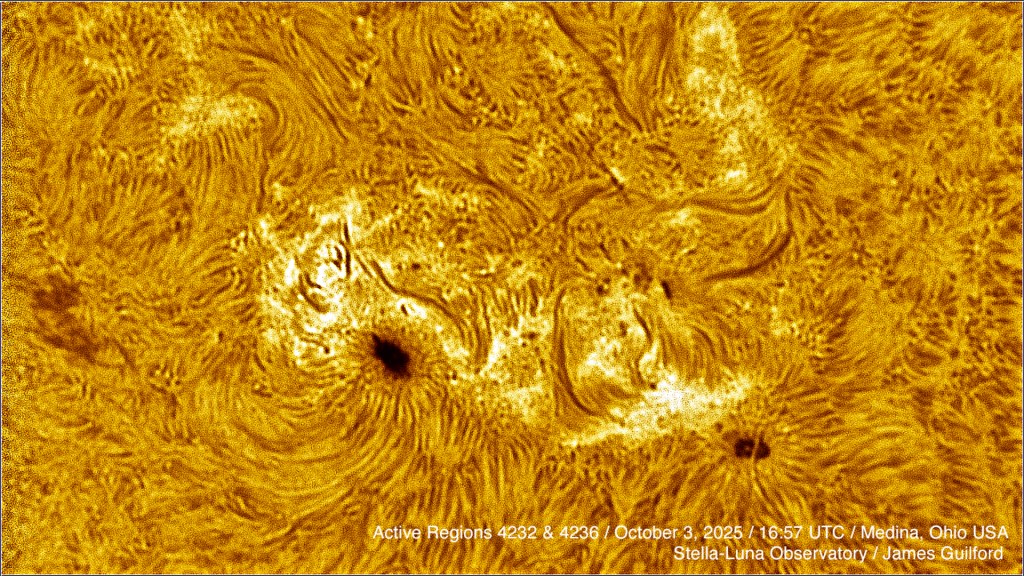
A close-up view of two large sunspots, as seen in hydrogen-alpha light. Solar plasma follows the intense and curved lines of magnetic force to highlight the turmoil in the vicinity of the spots.