Sun and Moon

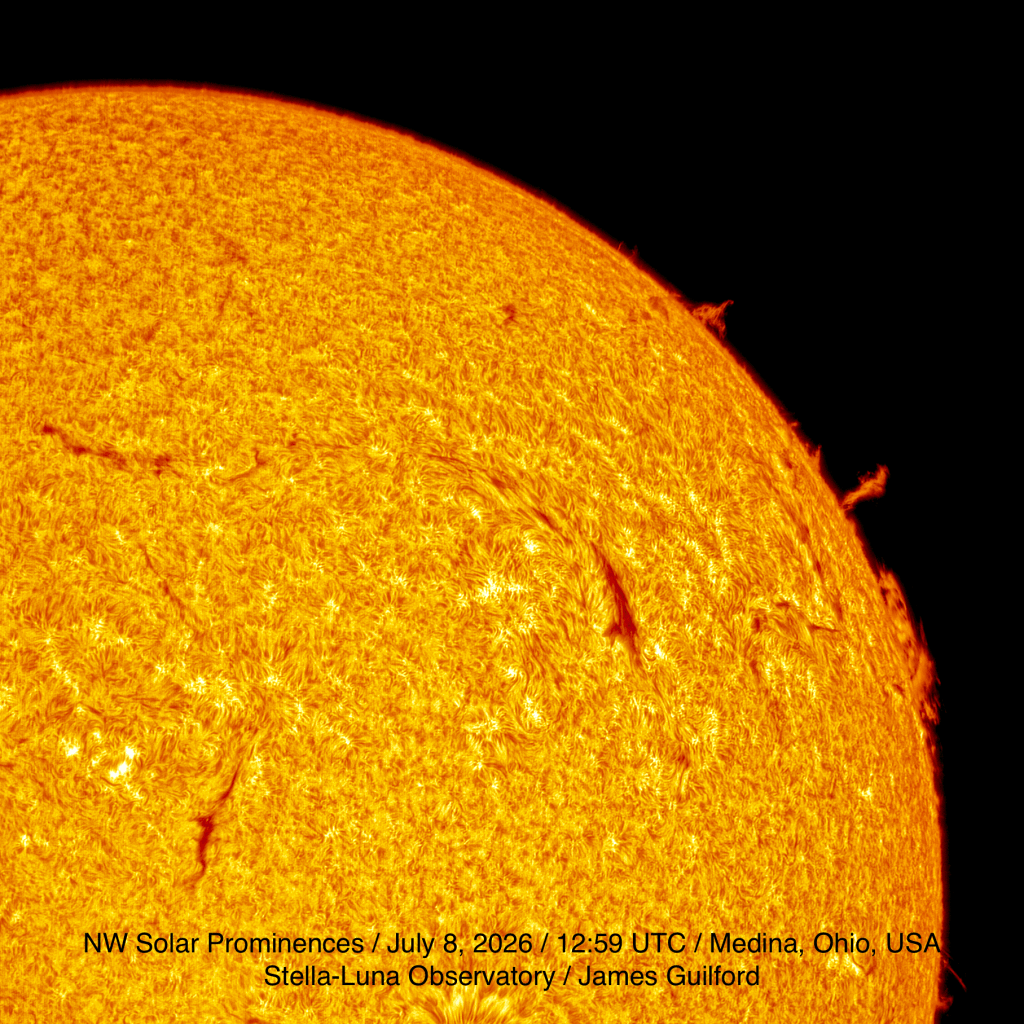
The northwestern Solar quadrant shown via hydrogen-alpha light, false color applied, shows the chaotic surface of the chromosphere, with several filaments visible. Along the rim are prominences contrasted against the blackness of space.

The morning presented an excellent opportunity for Solar observing and imaging — the sky was clear and, these days, Sun is rising between trees instead of behind them! While we have been following our star’s singular large sunspot for a few days, it turned out our best image from the morning was of the northwest Solar quadrant. Details in the chromosphere were beautifully rendered and several interesting prominences of various shapes and sizer graced the rim.

During one of the Solar imaging runs, we looked up and out through the dome aperture at the deep blue morning sky. There, floating on the denim background, was the Last Quarter Moon. Once finished with Sun, we aimed the scope at Moon, removed the solar gear from the white light telescope, and did a portrait of old Luna. We’ve done this not so long ago but still get a kick out of our daytime Moon.

Earth’s Moon in its Last Quarter phase is shown in this two-panel image made at 9:15 AM EDT, July 8, 2026.

By the way, the latest addition to our setup is a rig by ADM that allows two scopes to be held simultaneously on a single mount; that has been a wonderful way to quickly change between Solar wavelengths, and to use the individual telescopes without swapping out and rebalancing the system. The ADM rack is very well made, fully adjustable, and we have no fear of equipment coming loose and crashing to the ground — possibly the most important feature!
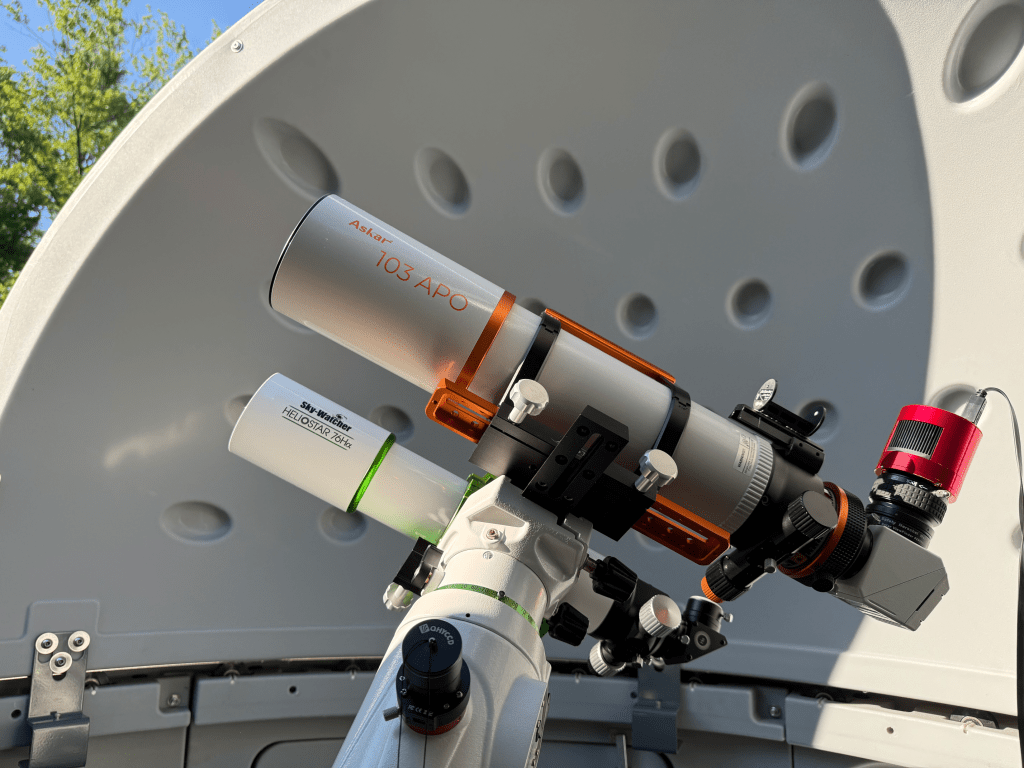
Multi-telescope rack by ADM allows two telescopes to ride the pier mount at the same time, delivering flexibility and efficiency to our setup.

Recent Solar adventures

October 3, 2025 — We had been having quit a lot of trouble lately, recording data and reproducing images of Sun with prominences. There was some early success but even those images were a struggle to produce. Taking a look at suggested camera settings found in an article on solar imaging, one thing stood out — gain! We had nudged the camera’s gain setting upward and that’s not helpful and certainly not recommended; the setting should be very low or even zero! A few adjustments in data capture parameters was all it took to make a big difference in image processing and results!

Sun’s northeast quadrant, as recorded in hydrogen-alpha light. Visible are several filaments, as three prominences appear along the star’s limb. The “peach fuzz” appearance of the edge of the solar disk is caused by the presence of innumerable spicules or small prominences.

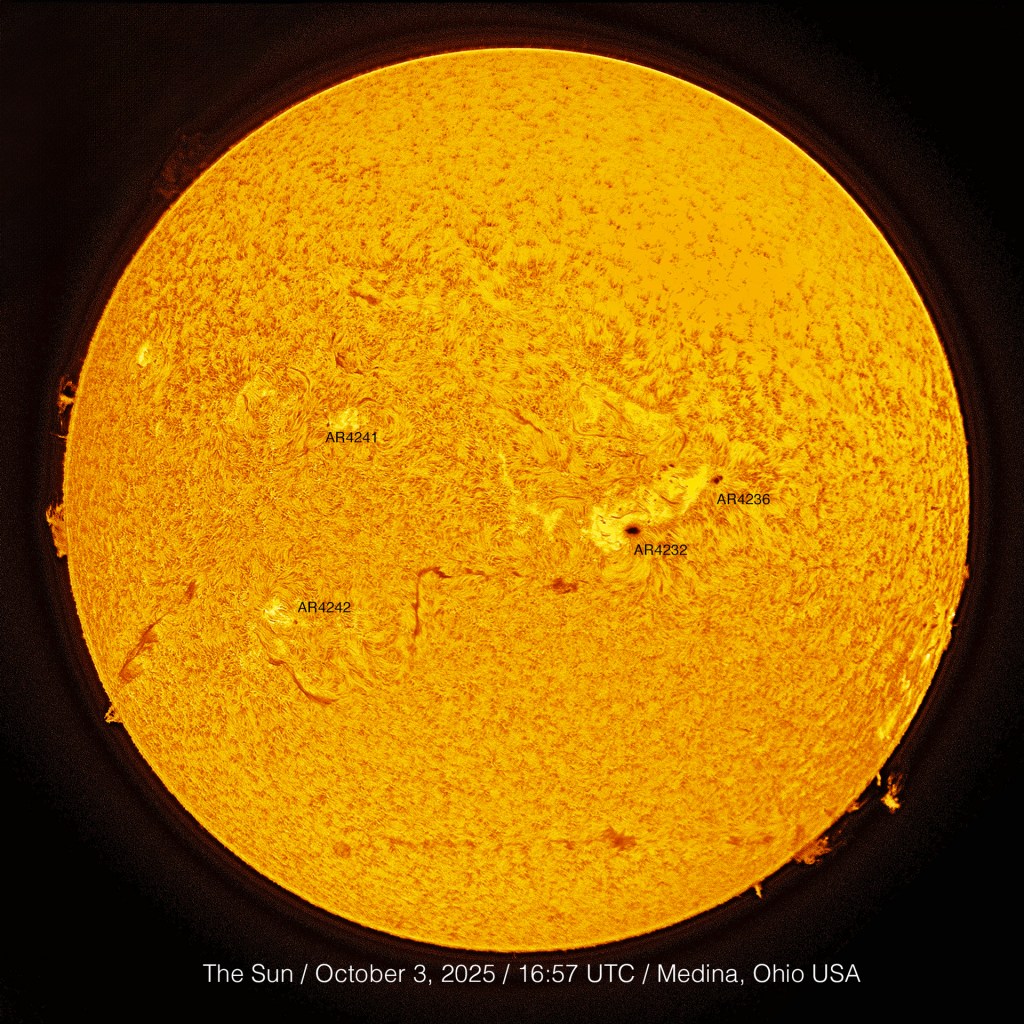
We’re very pleased with Barlow-boosted views, shown here, though we’re still having some issues with achieving even lighting across whole-disk views — just can’t seem to get them tuned right with the Coronado SolarMax III. Visual observing was also very good, especially with the TeleVue 10mm eyepiece. October 3 conditions: Clear sky, temperature of 74°F, light southeast wind.

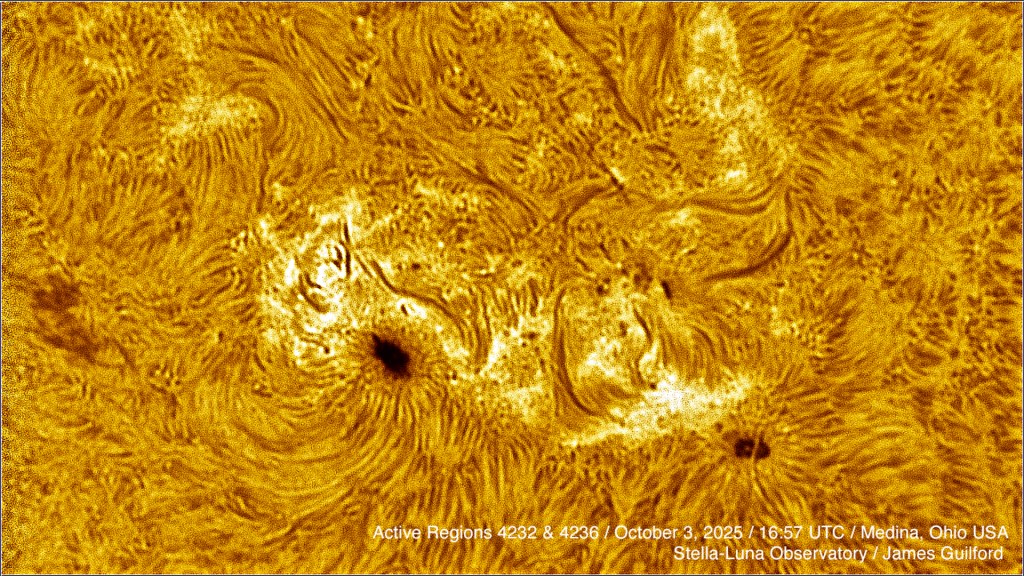
A close-up view of two large sunspots, as seen in hydrogen-alpha light. Solar plasma follows the intense and curved lines of magnetic force to highlight the turmoil in the vicinity of the spots.