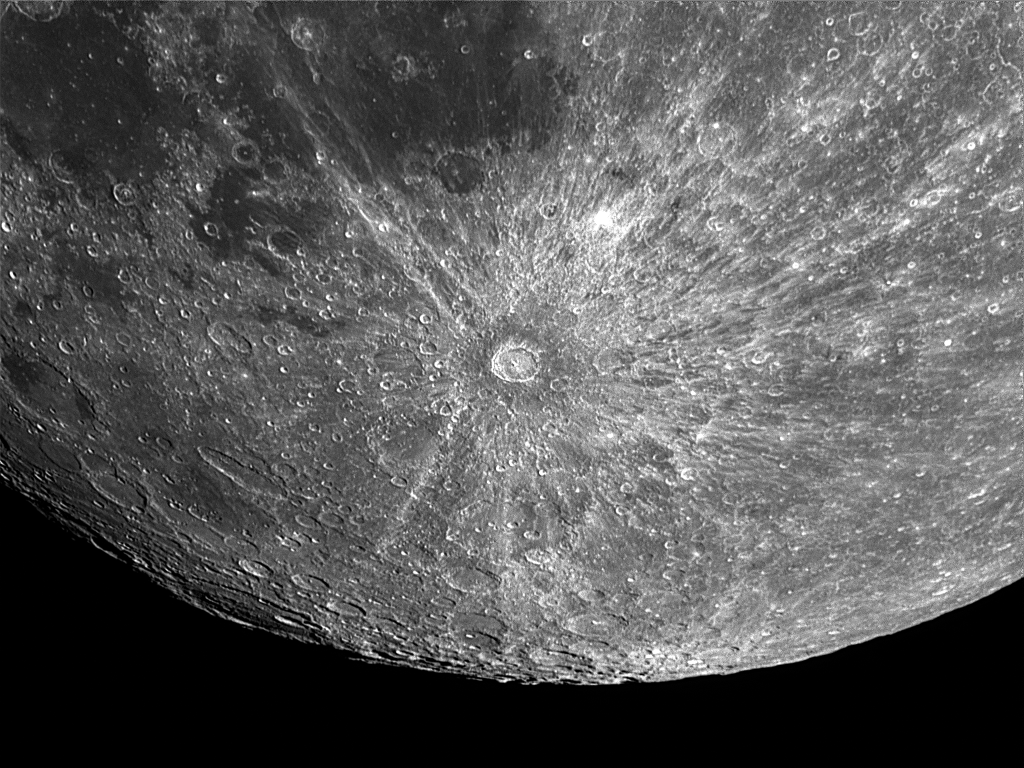
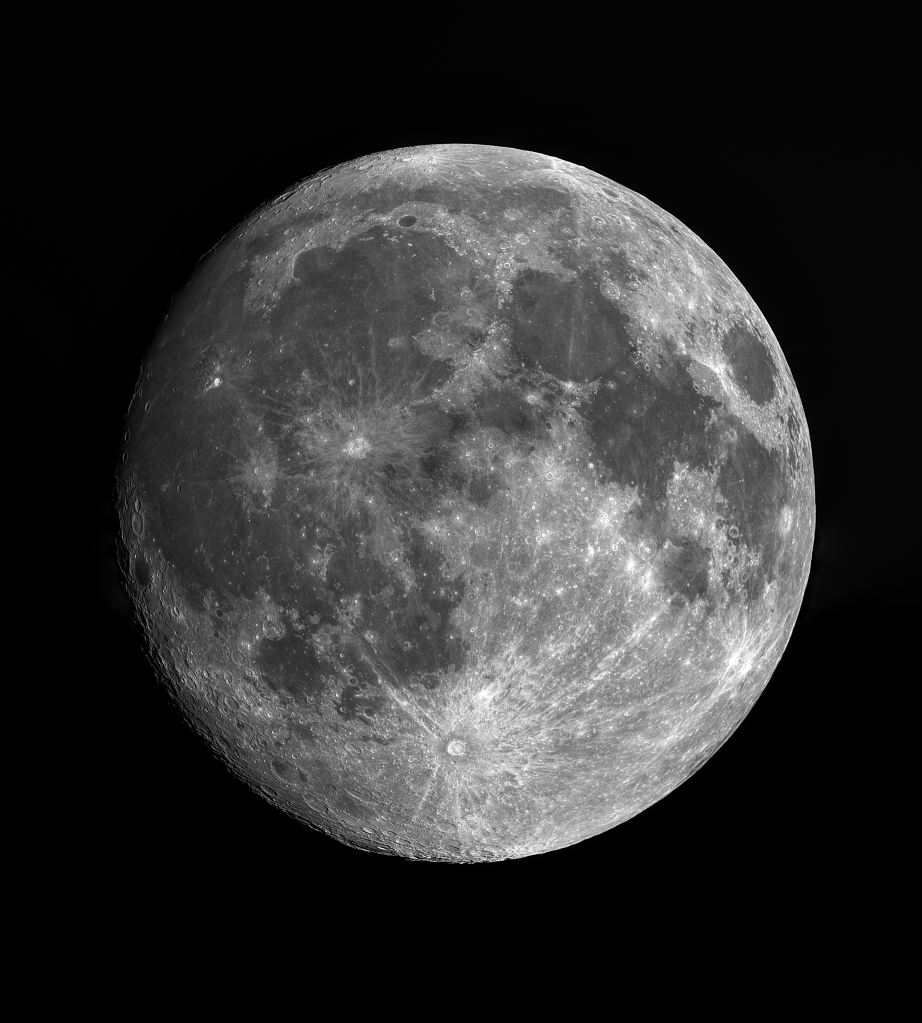
Last Night’s Waxing Gibbous Moon. Ejecta rays are particularly visible, radiating from their originating craters in this two-panel portrait of the 97% illuminated Moon. Particularly notable are the rays surrounding crater Tycho in the lower, southern region. Although Tycho, about 53 miles in diameter (85 km), is located amongst a multitude of other craters, many of them larger, its sharp edges, with high albedo and bright ejecta rays blanketing the darker regolith, make the feature quite prominent.
The original image is rich in detail displaying many craters large and small, the Lunar “seas” and crater Tycho with its ejecta ray network. The crater was formed an estimated 108 million years ago, freshly excavating bright material from beneath the Lunar surface and splashing it across the older, darker surrounding areas. The rays are impressive in their expanse, some reaching a length of more than 930 miles (1,500 km). Numerous, smaller, “satellite” craters resulted from the same impact that formed Tycho.