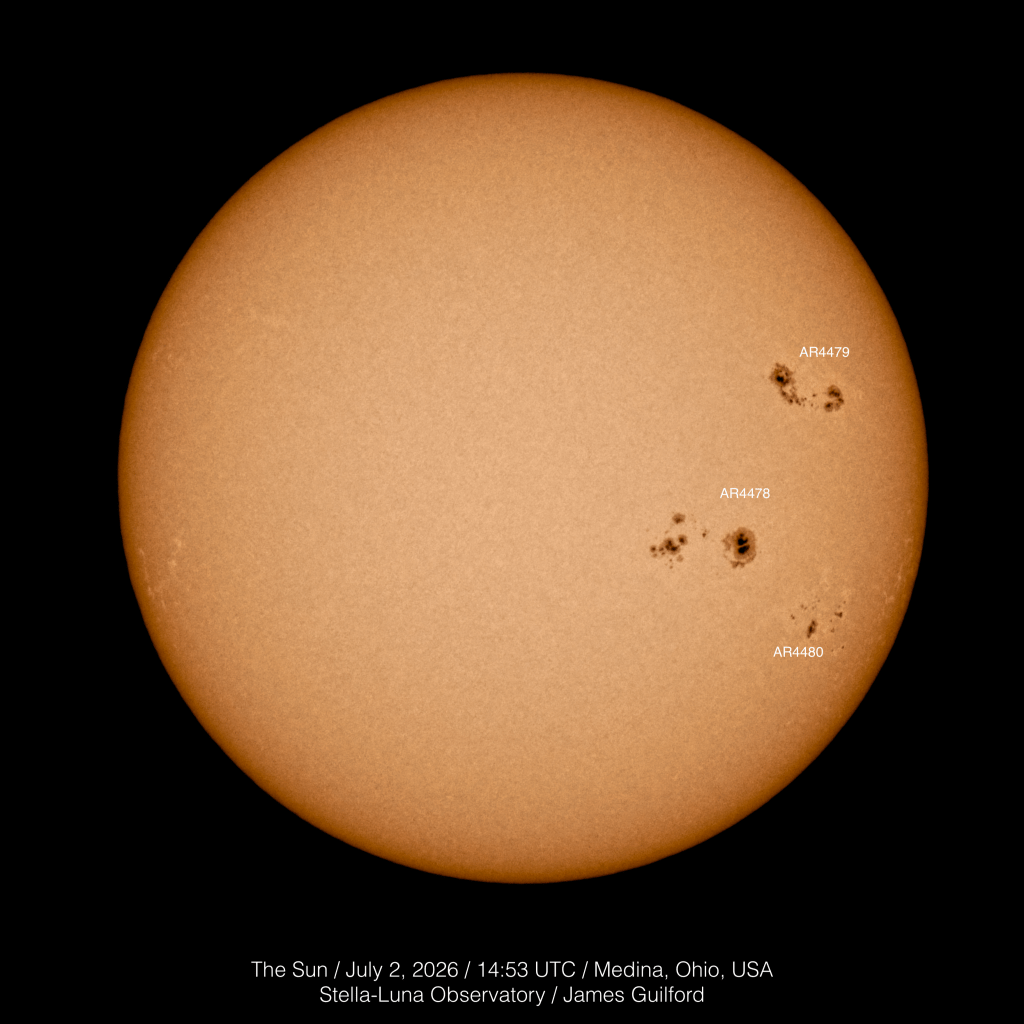
Whole-disk view of Sun as it appeared late morning July 2, 2026. The sunspots are nearing Sun’s western horizon (right) but still pose a threat of geomagnetic storms from their flares. This image was captured using our Canon EOS 5D Mk. 4 DSLR, 400mm telephoto lens with 2X extender, and white light Baader film solar filter. False color added.
Three active regions nearing the western solar horizon have been busy, exploding with multiple flares and coronal mass ejections (CMEs). That solar material is expected to reach Earth beginning July 3 and continuing into the U.S. Independence Day weekend. The CMEs impacting Earth’s magnetosphere could produce auroras. Those blessed with clear night skies should be alert for a possible *quiet* fireworks display! Respect.
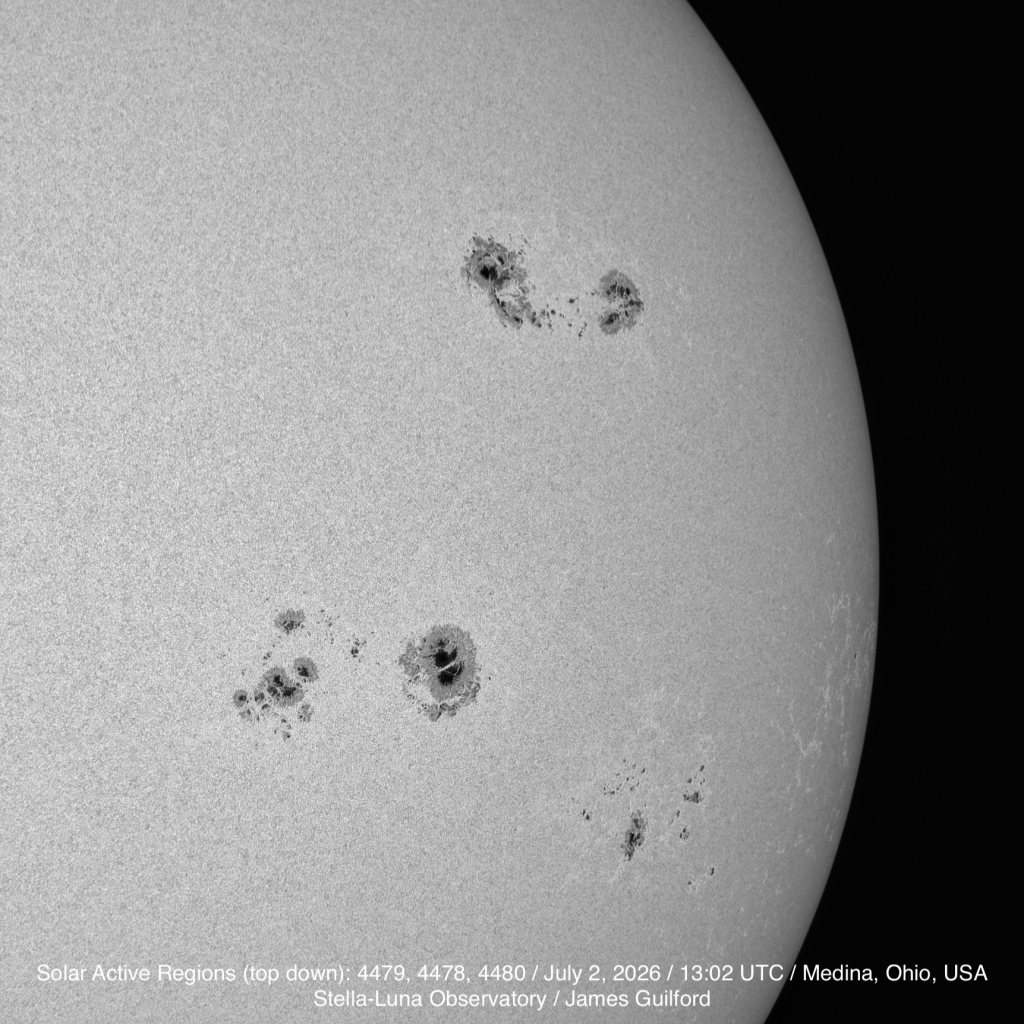
A closeup view of the three active regions mentioned in this post was recorded using our Askar 103APO telescope, and Baader Planetarium Herschel safety wedge. The image was recorded the morning of July 2, 2026 in monochrome and is reproduced here in that state. Photosphere granulation, faculae, and sunspot details are visible here.