Luna and her bright rays

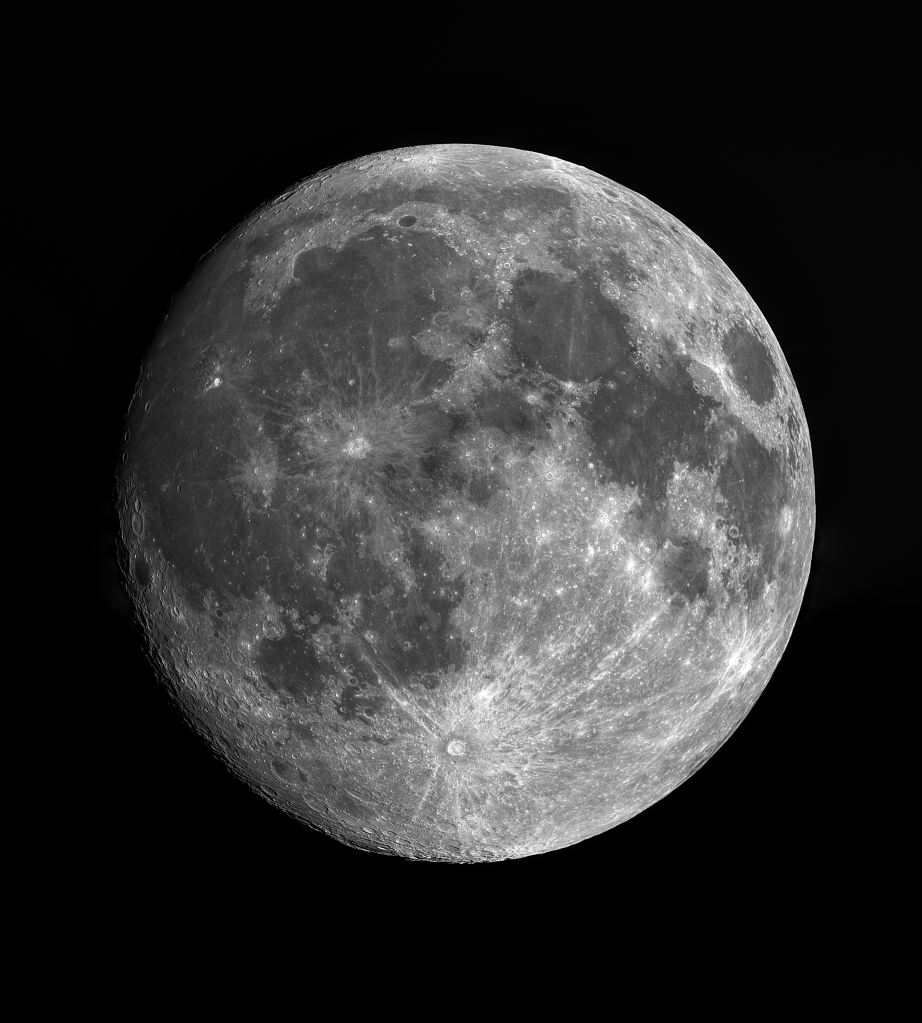
A full-disk image of Earth’s Moon as it approached its Full phase the night of September 24, 2026. Image Credit: James Guilford.

Last Night’s Waxing Gibbous Moon. Ejecta rays are particularly visible, radiating from their originating craters in this two-panel portrait of the 97% illuminated Moon. Particularly notable are the rays surrounding crater Tycho in the lower, southern region. Although Tycho, about 53 miles in diameter (85 km), is located amongst a multitude of other craters, many of them larger, its sharp edges, with high albedo and bright ejecta rays blanketing the darker regolith, make the feature quite prominent.

The original image is rich in detail displaying many craters large and small, the Lunar “seas” and crater Tycho with its ejecta ray network. The crater was formed an estimated 108 million years ago, freshly excavating bright material from beneath the Lunar surface and splashing it across the older, darker surrounding areas. The rays are impressive in their expanse, some reaching a length of more than 930 miles (1,500 km). Numerous, smaller, “satellite” craters resulted from the same impact that formed Tycho.
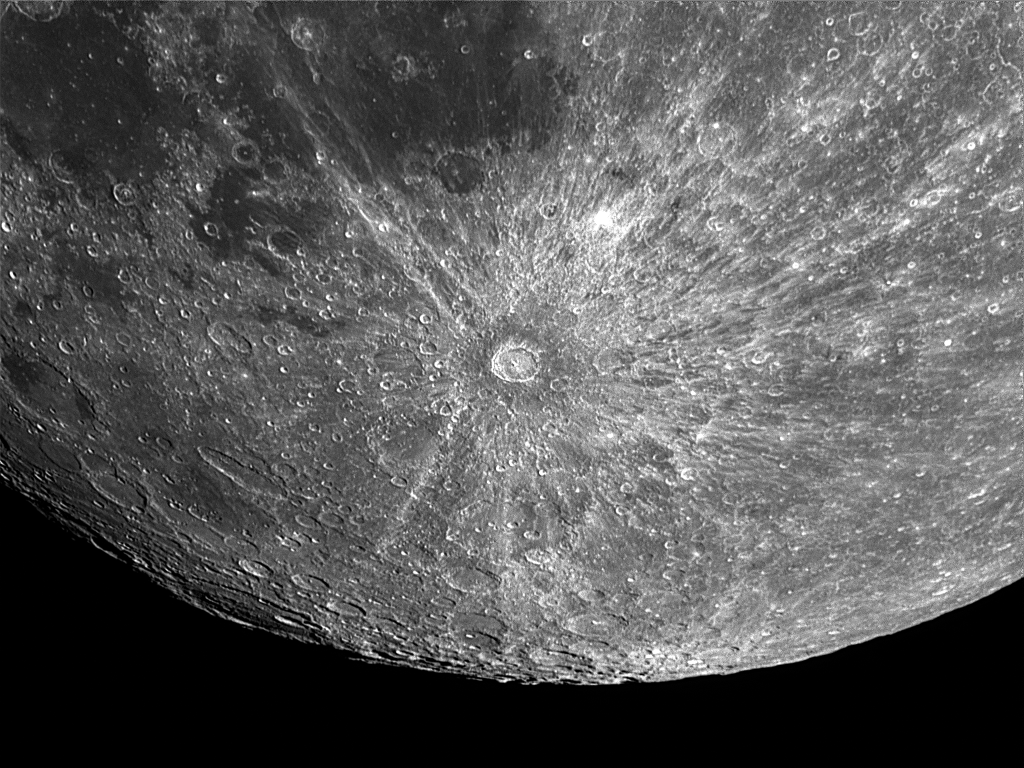
Crater Tycho in Moon’s southern hemisphere, September 24, 2026. Image Credit: James Guilford.

Two Moons, One Day

Waxing Gibbous Moon, January 10, 2025, at 7:18 PM EST. Note the delicate “C” shape on the upper left-hand edge of the lunar image — rising sun lighting the mountain tops that line Sinus Iridium while lower terrain remains in darkness. Crater Copernicus stands out at center-left, and Crater Tycho stands proudly in the heavily-bombarded lower area of the image. Note the extensive spread of ejecta rays that radiate across Moon’s surface from the relatively recent formation of Tycho. Photo by James Guilford.

It was a clear night so, of course, I had to go outside and take a look. Cold too, at 13℉, so I didn’t stay long! Mars, Jupiter, and Saturn were easy to find, all three shining bright. I was out for a “Moon shot”, though, got a pretty good one. This was made using our Sun shot setup, minus solar filter, of course! Moon was beginning its occultation of the Pleiades which didn’t image well.

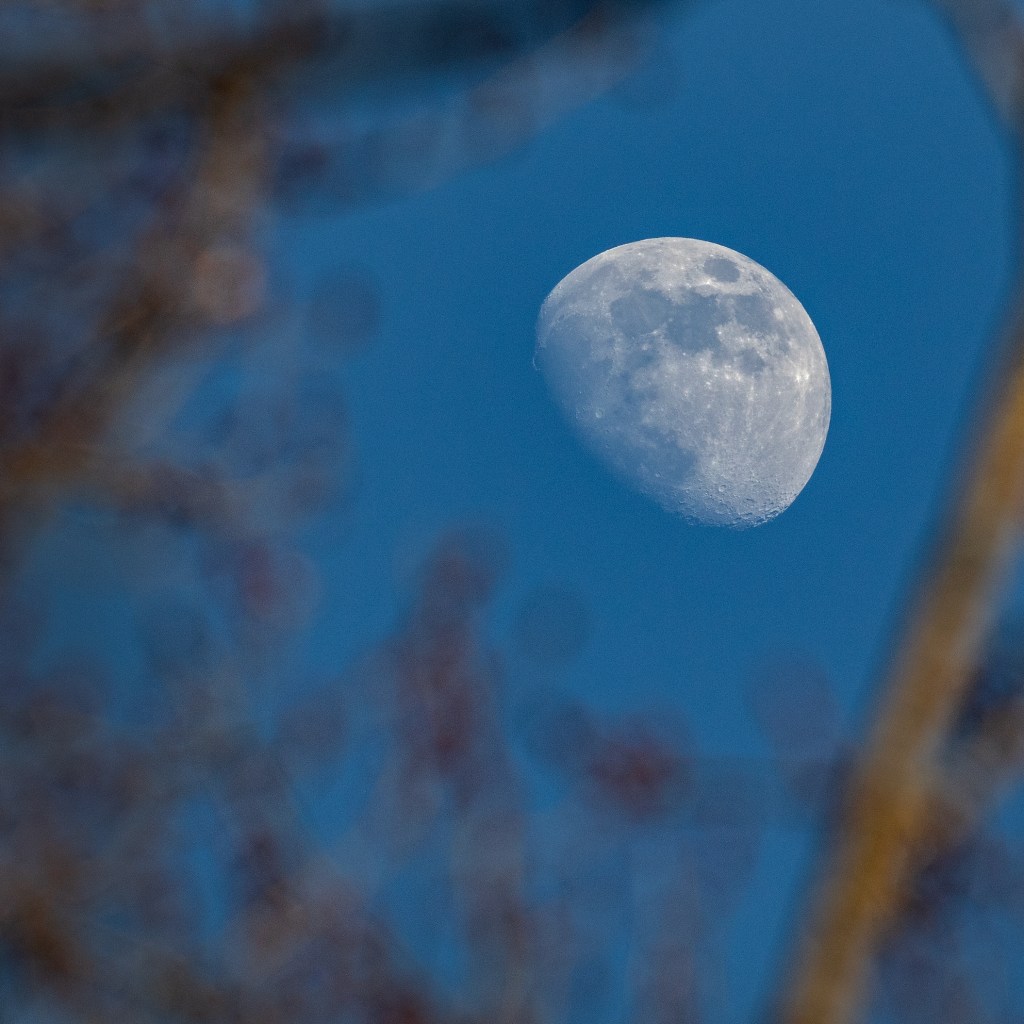
The day was clear, as well, and Moon was clear and bright even against the blue daytime sky. So, here is our neighboring world rising through the trees. This is presented second, instead of at the top, because we prefer the nighttime image.

Waxing Gibbous Moon. January 9, 2025, at 4:08 PM EST. Photo by James Guilford.