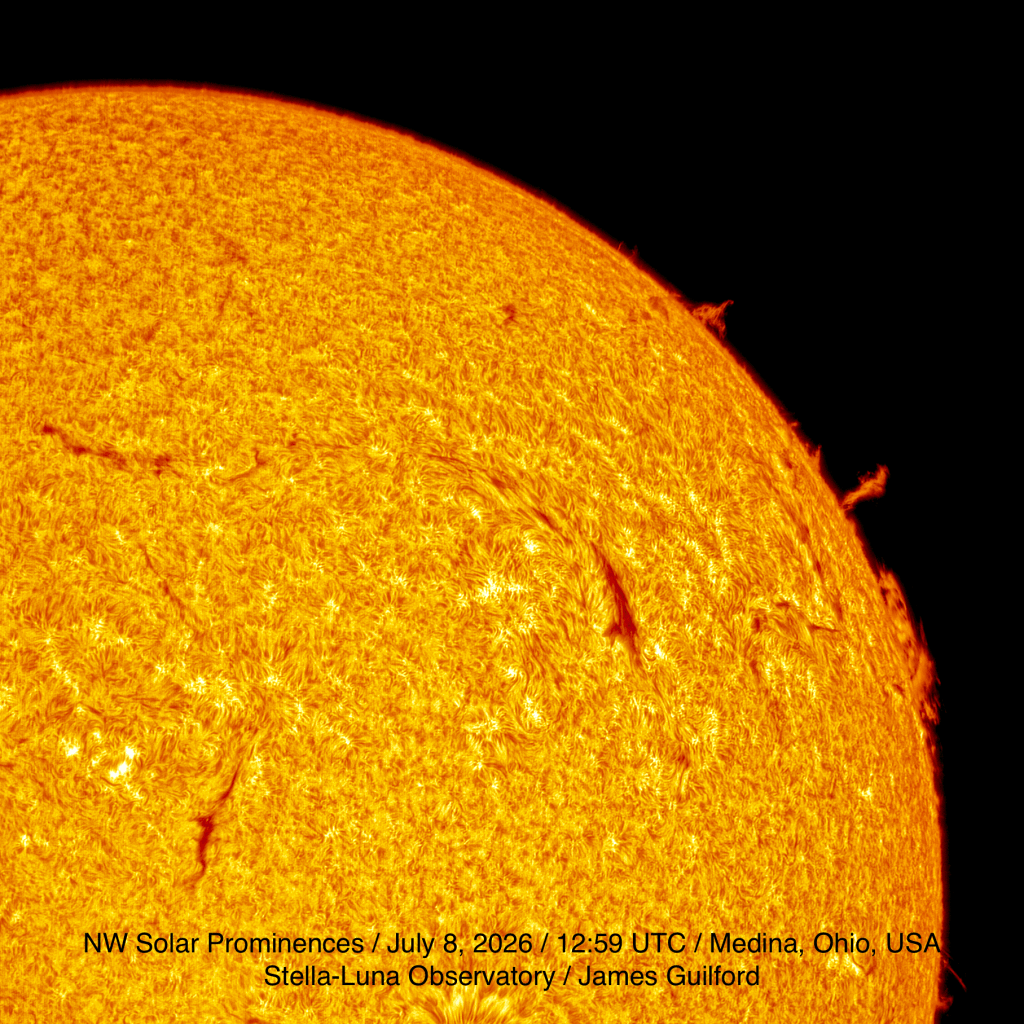
The morning presented an excellent opportunity for Solar observing and imaging — the sky was clear and, these days, Sun is rising between trees instead of behind them! While we have been following our star’s singular large sunspot for a few days, it turned out our best image from the morning was of the northwest Solar quadrant. Details in the chromosphere were beautifully rendered and several interesting prominences of various shapes and sizer graced the rim.
During one of the Solar imaging runs, we looked up and out through the dome aperture at the deep blue morning sky. There, floating on the denim background, was the Last Quarter Moon. Once finished with Sun, we aimed the scope at Moon, removed the solar gear from the white light telescope, and did a portrait of old Luna. We’ve done this not so long ago but still get a kick out of our daytime Moon.

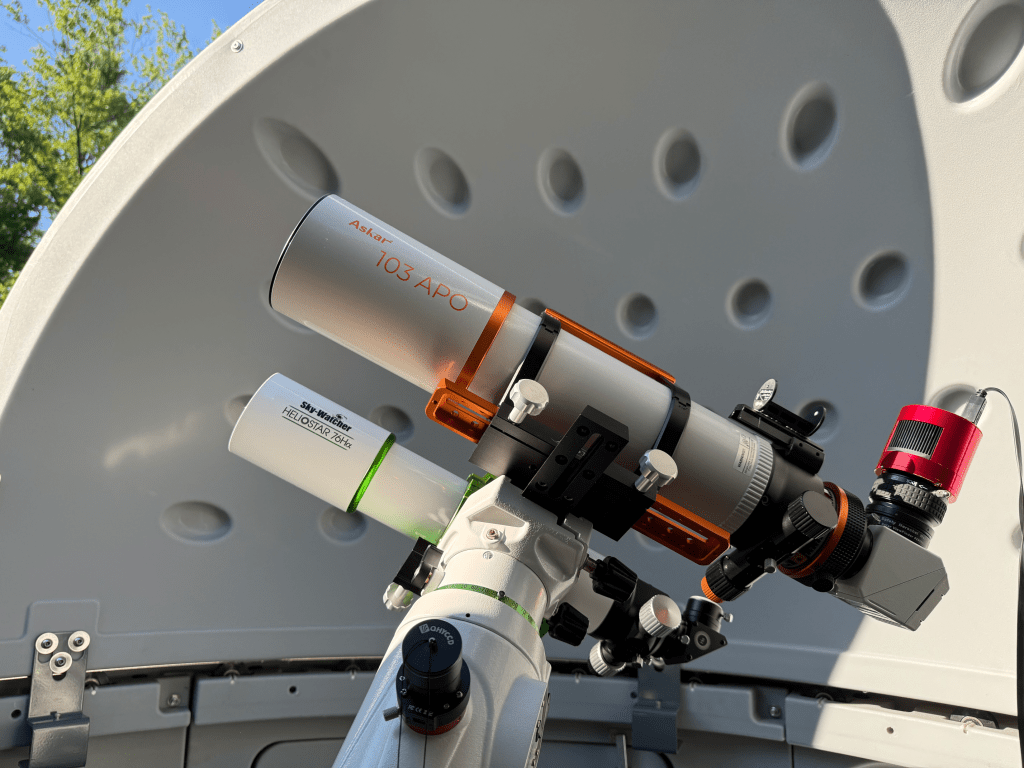
By the way, the latest addition to our setup is a rig by ADM that allows two scopes to be held simultaneously on a single mount; that has been a wonderful way to quickly change between Solar wavelengths, and to use the individual telescopes without swapping out and rebalancing the system. The ADM rack is very well made, fully adjustable, and we have no fear of equipment coming loose and crashing to the ground — possibly the most important feature!