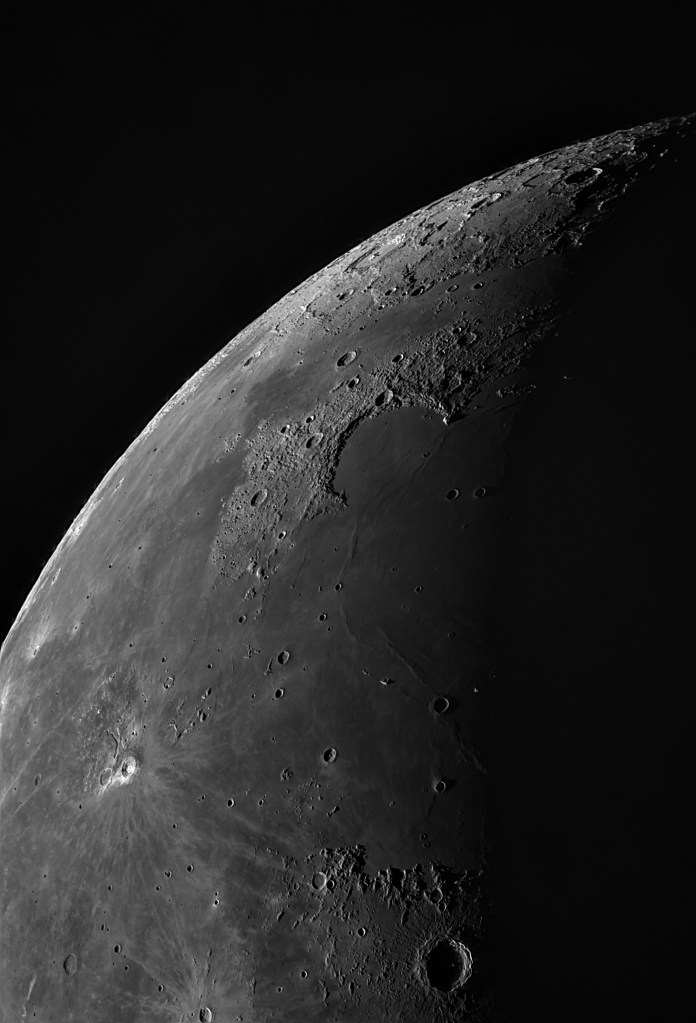
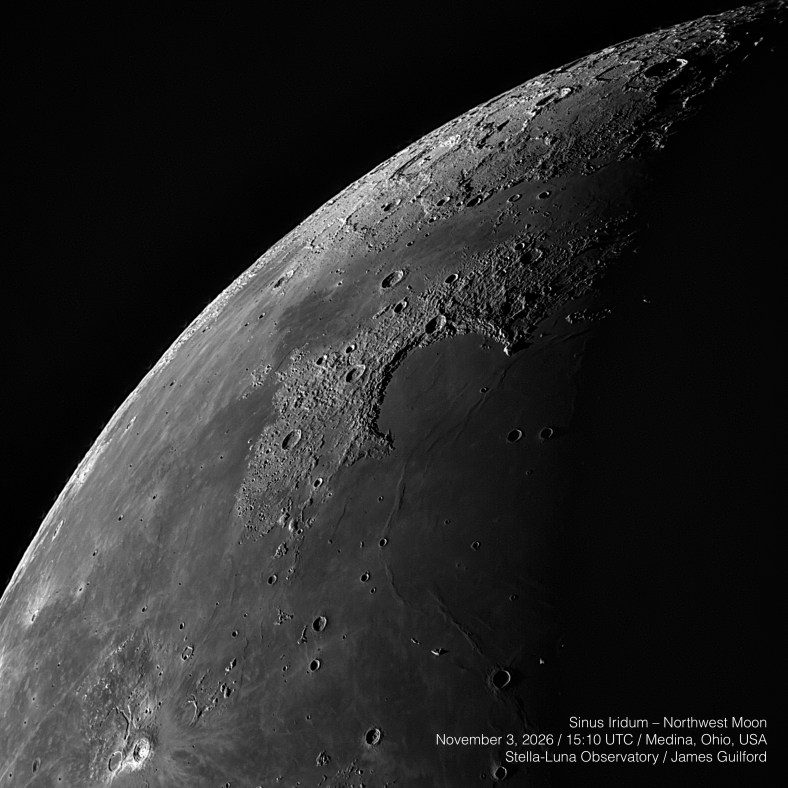
We’re pretty happy with this picture of Sinus Iridum, “Bay of Rainbows”, and part of the Mare Imbrium region of Earth’s Moon. This is another daytime shot, often the only time we can observe certain Lunar phases. With winds picking up due to changing weather conditions, seeing was only fair to average – attempts to use higher magnification were not rewarded.
Sinus Iridum is an inlet, of sorts, to the great Mare Imbrium, “Sea of Showers”, located within the much larger Imbrium Basin. The basin was formed when our dear neighbor in space, our Moon, was struck by a protoplanetary body during the Late Heavy Bombardment period of Solar System history. Imbrium is one of the larger known craters in the Solar System. Sinus Iridum, about 249 km (155 miles) in diameter, was apparently formed by a large impactor, leaving an impressive crater; the southeastern wall of the crater was disrupted when Mare Imbrium was formed, and both areas were flooded with lava forming the smooth plain.
For its interesting features and changing appearance during the Lunar day cycle, Sinus Iridum is a favorite subject for observers and certainly one of ours.