A busy night, and day, of looking up

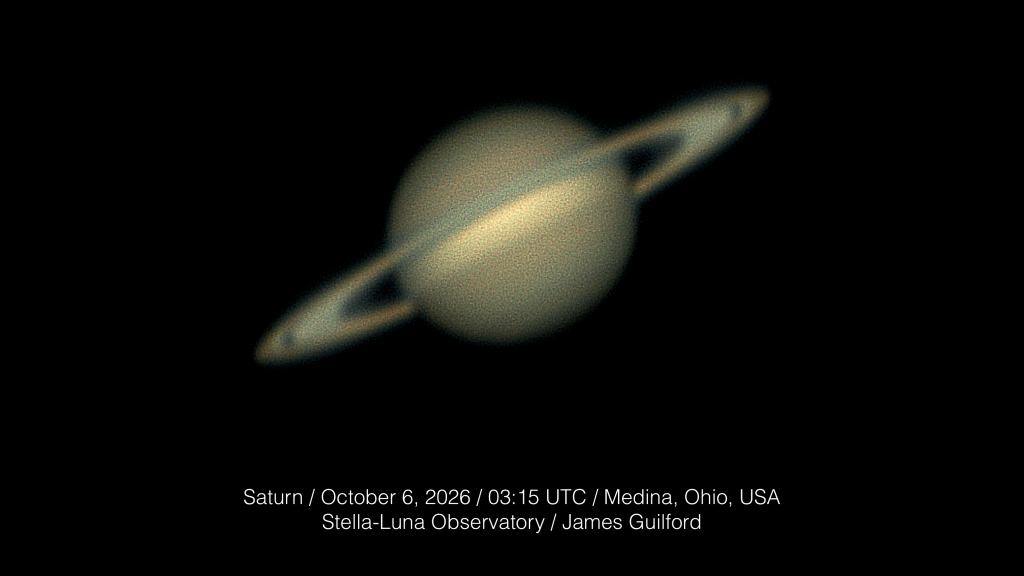
Saturn late the night of October 5 (local time).

We had a busy astronomical night and morning: Last night (October 5) we went for Saturn once again. Sky forecasts called for Average seeing with poor transparency; what we got was Fair to Poor seeing and poor transparency. Still, we imaged ’cause you’ve got to keep trying! Here’s Saturn from about 11:15 PM EDT Monday.
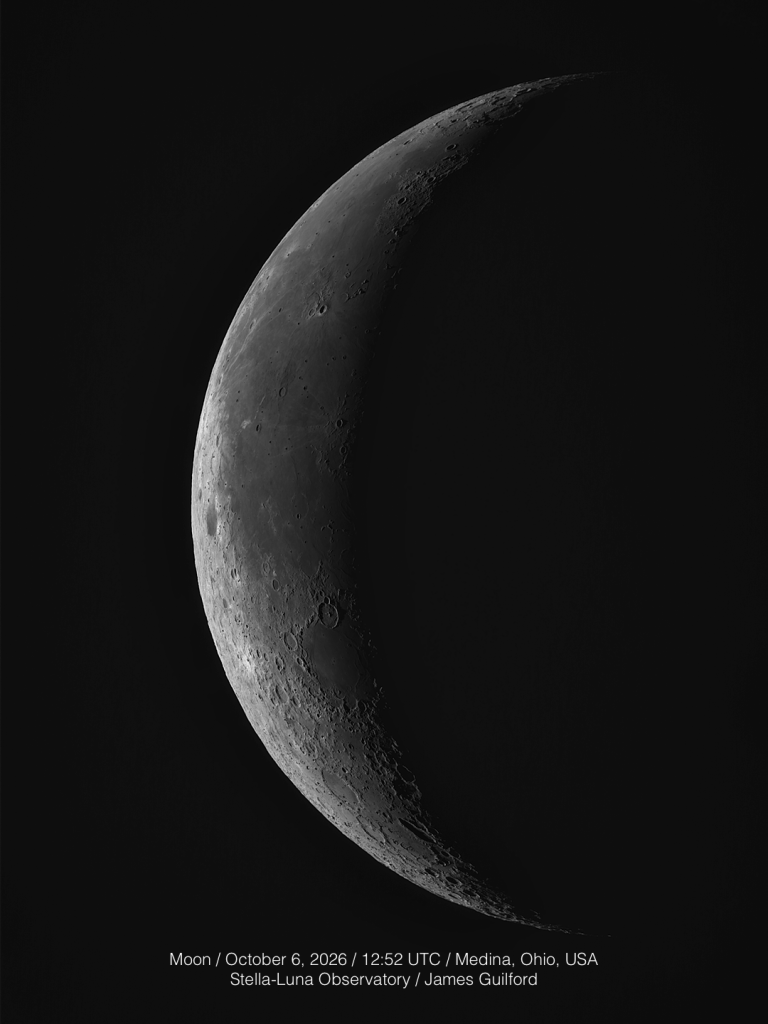
Earth’s Moon imaged during daylight hours October 6, 2026.

While we were unable to image the October 6 occultation of Jupiter, we did image both Moon and Jupiter in the bright morning sky. Here’s the waning crescent Moon as it appeared around 9:00 AM EDT. Still nearby following the end of occultation was planet Jupiter, so we went for that as well.
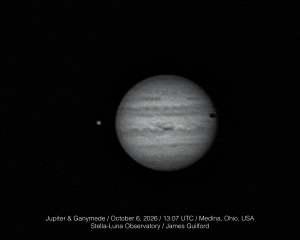
Jupiter with Ganymede, one of its four Galilean Moons, imaged during daytime, October 6, 2026.

The bright dot on the left is Jupiter’s moon Ganymede, and the black dot on the planet’s right-hand limb is Ganymede’s shadow!

Viewing a bright planet like Jupiter by eye is possible during the daylight hours, IF you can find it with your telescope! Our image was recorded with an emphasis on infrared light which increased contrast, turning the bright blue sky black.
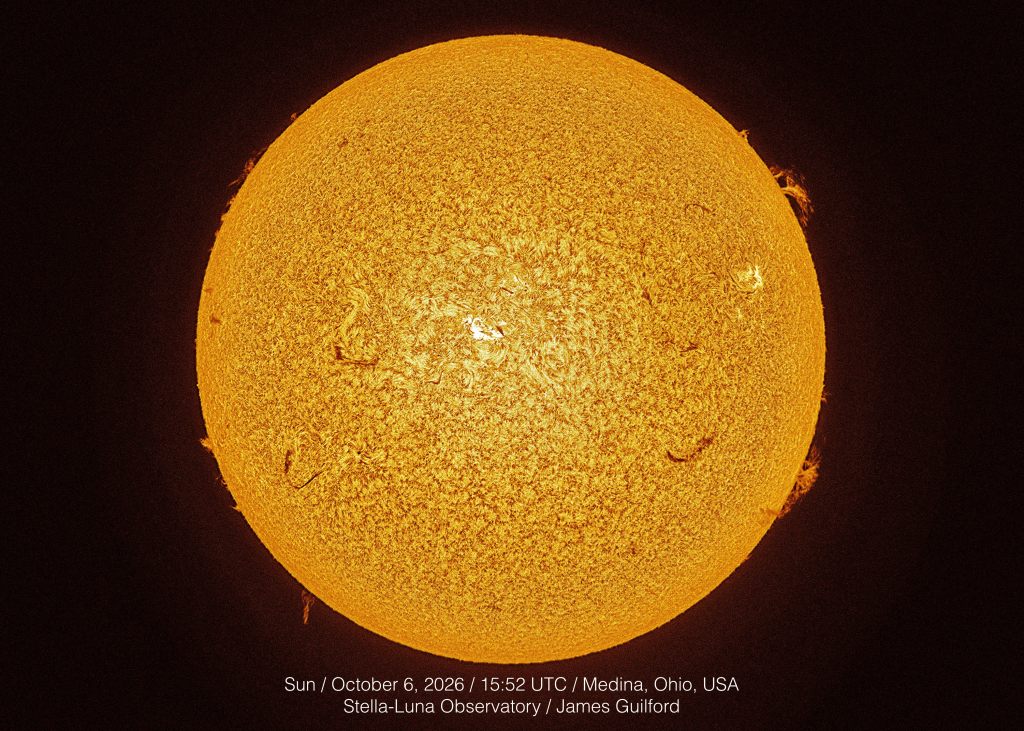
The Sun, imaged in hydrogen-alpha light showing our star’s chromosphere and numerous prominences, as they appeared October 6, 2026. False color added.

Later, around 11:30 AM, it being a sunny day, we set up for solar imaging. While our nearest star is officially at low activity levels, there was plenty to see. A number of impressive prominences lined the Solar limb, and close-up views of the surface revealed a maelstrom of plasma shaped by intense magnetic fields. The bright patch near the center of the Solar disk is active region 4549 which, today, issued a full-halo CME toward Earth. There may be auroras October 9. Yep, a busy day. 
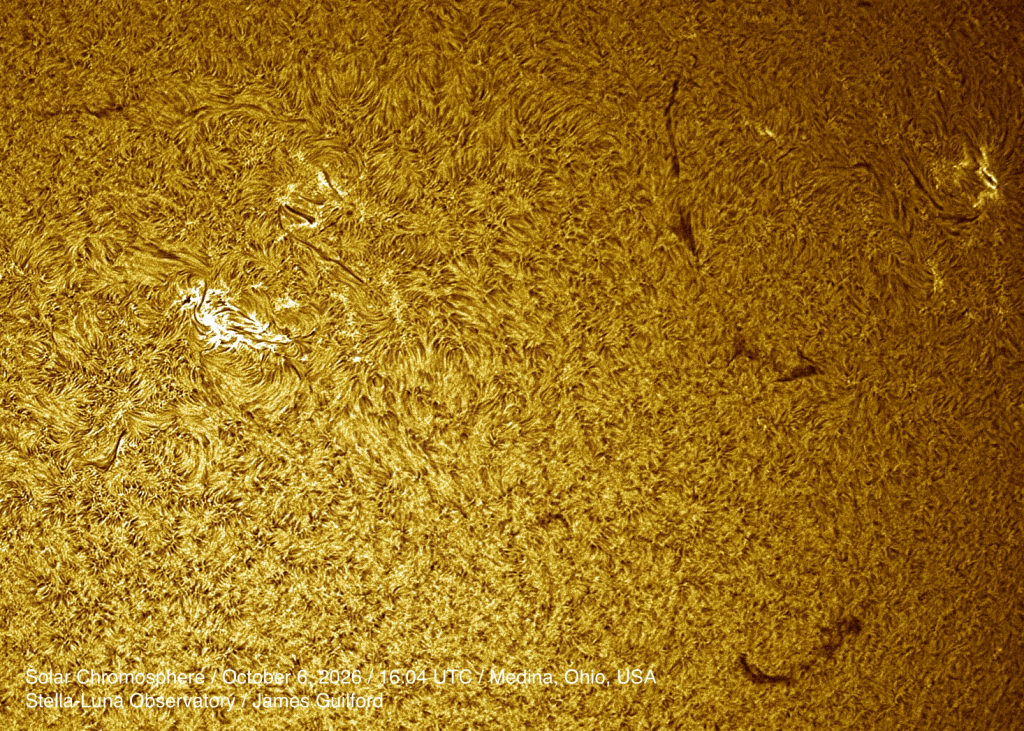
A closeup view of the Solar chromosphere, imaged in hydrogen-alpha light, as it appeared October 6, 2026. False color added.

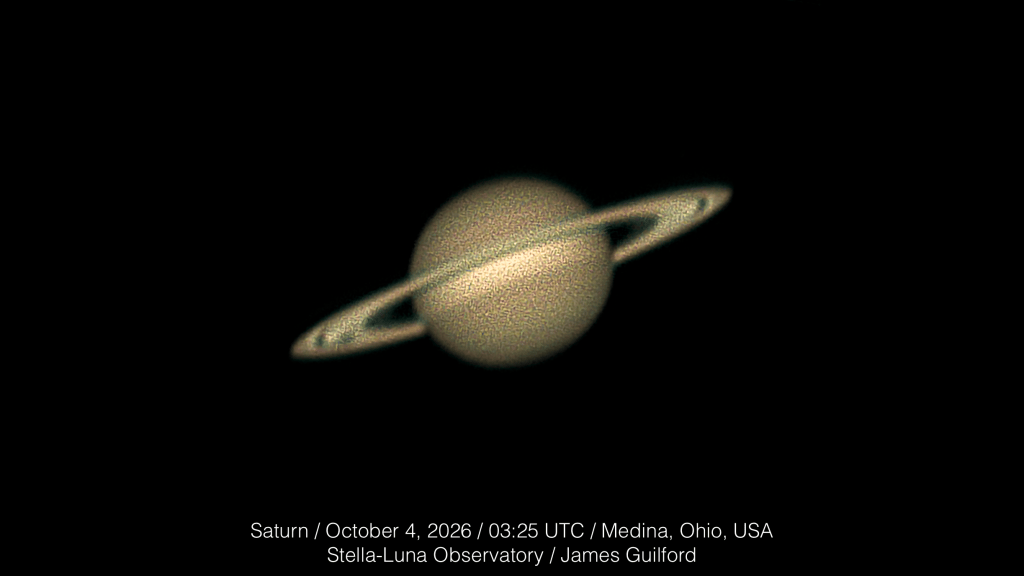
Saturn on Opposition Day

Planet Saturn on “opposition day”, October 4, 2026. The dark blotch within the rings on the left-hand side of this image was caused by a meteoroid impact. Image credit: James Guilford

Saturn early on “opposition day” was a bright yellowish “star” to the unaided eye as we viewed it close to midnight, Eastern Daylight Time. To the telescope, however, it shown in all its glory, bright and bearing rings! Recently discussed in astronomy circles was the dark blotch and distorted Cassini Division line (left-hand side here) within the ring system, and we were happy to be able to capture that detail. The ring was apparently struck by a meteoroid that caused a cascading effect resulting in a large-scale disruption, broadly categorized as a spoke. Distance from Earth to Saturn at the time this image was recorded was about 1.3 billion kilometers, taking light about 70 minutes to reach us here. Opposition is the point in our orbits when a line from Sun to Saturn would go straight through Earth, and when the two worlds are about as near each other as they can get.

Progress on Saturn

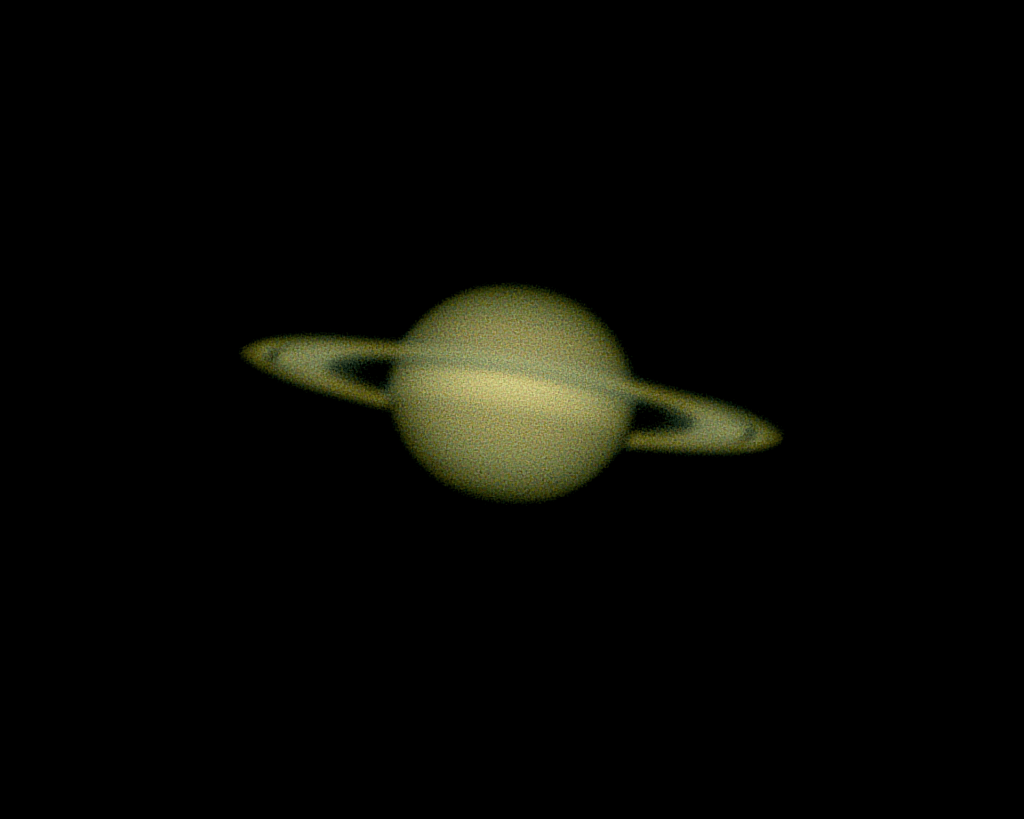
Less than a week before planet Saturn reaches opposition, this image shows the full circle of the planet, its ring plane tipped up. Though the image creator makes no claims of good quality, some banding in the planetary atmosphere shows in this image, and the Cassini Division -- a dark gap within the ring plane -- is resolved. September 29, 2026.
Saturn, September 29, 2026. Not the best you, or we, have ever seen but this image represents considerable progress in our planetary imaging efforts.

Our best effort at imaging Saturn does not compete with others we have seen online but we’re making progress. The effort two days prior was so bad we couldn’t bear to share it! We’re hoping for quieter air (better seeing) in the coming days as the ringed world approaches opposition – that will help immensely. Unsteady air is a problem in itself, also contributing to difficulties in achieving good focus. Still, this soft image of the ringed world shows some banding in the planetary atmosphere, a hint of the ring shadow across the globe, and the Cassini Division — the dark gap within the ring plane. In the meantime, under upcoming days of cloudy skies, we’ll be working on technical improvements under the dome.