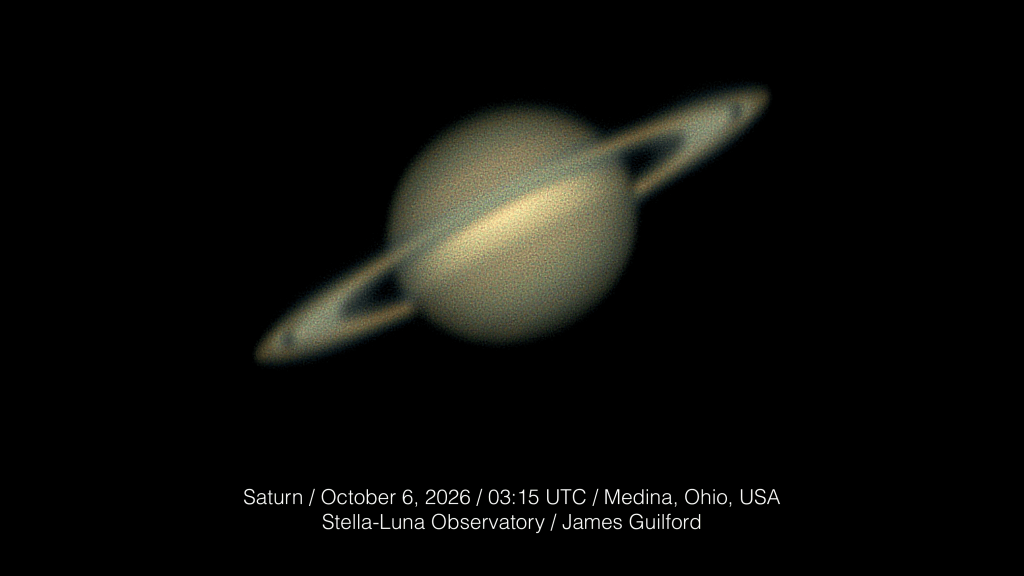
We had a busy astronomical night and morning: Last night (October 5) we went for Saturn once again. Sky forecasts called for Average seeing with poor transparency; what we got was Fair to Poor seeing and poor transparency. Still, we imaged ’cause you’ve got to keep trying! Here’s Saturn from about 11:15 PM EDT Monday.
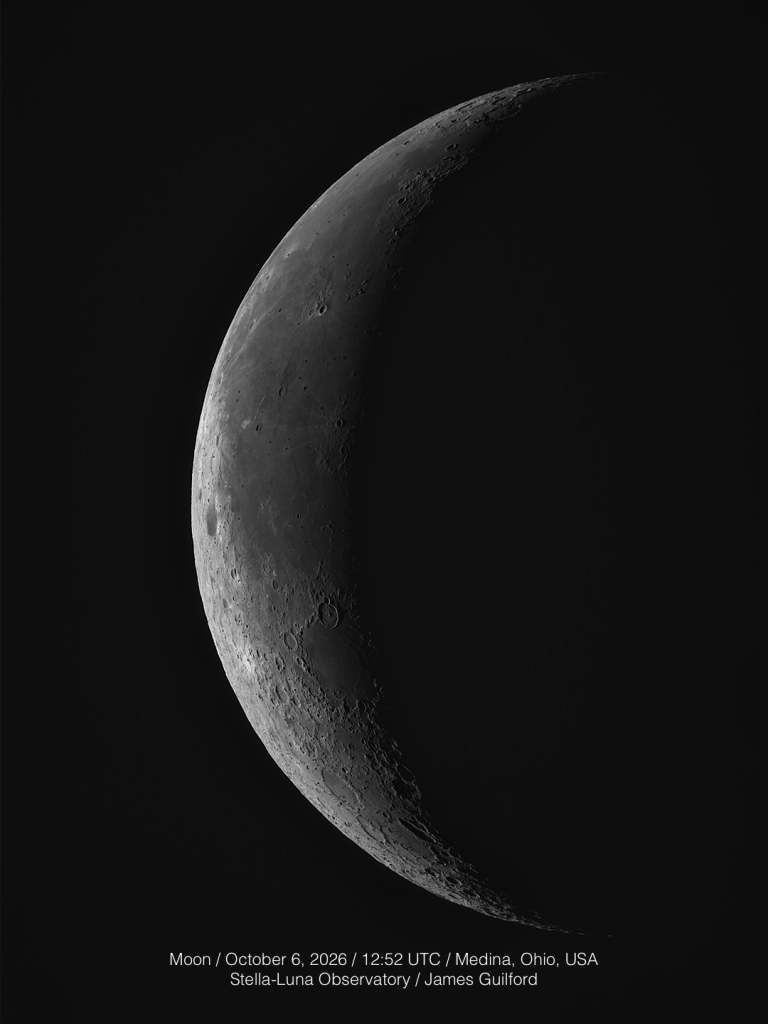
While we were unable to image the October 6 occultation of Jupiter, we did image both Moon and Jupiter in the bright morning sky. Here’s the waning crescent Moon as it appeared around 9:00 AM EDT. Still nearby following the end of occultation was planet Jupiter, so we went for that as well.
The bright dot on the left is Jupiter’s moon Ganymede, and the black dot on the planet’s right-hand limb is Ganymede’s shadow!
Viewing a bright planet like Jupiter by eye is possible during the daylight hours, IF you can find it with your telescope! Our image was recorded with an emphasis on infrared light which increased contrast, turning the bright blue sky black.
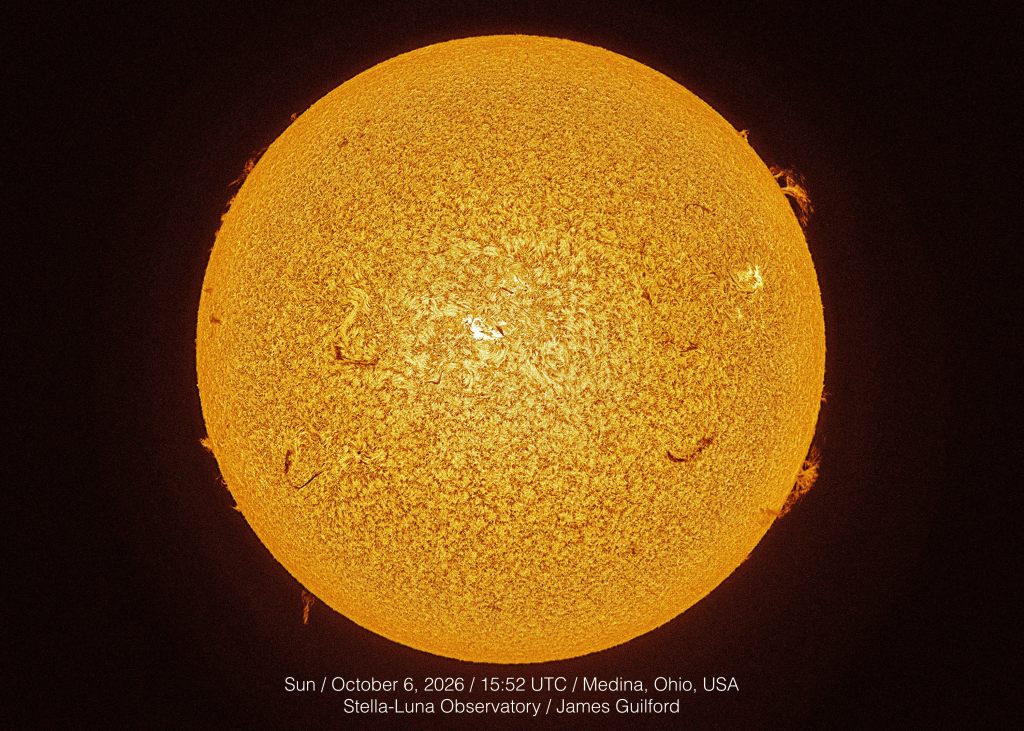
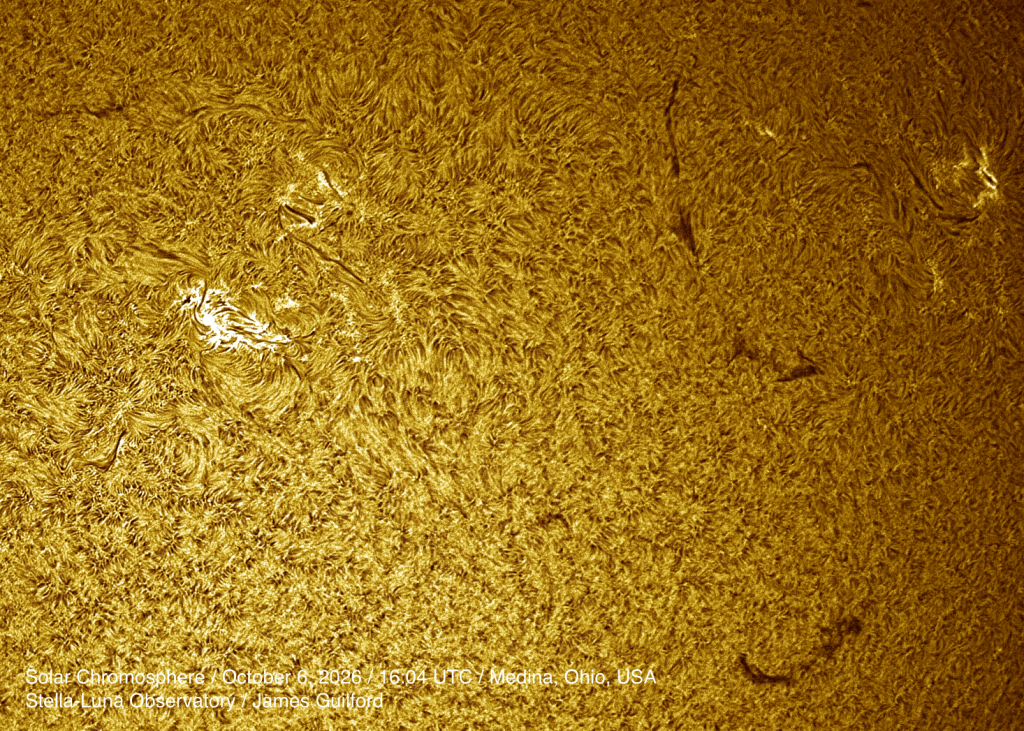
Later, around 11:30 AM, it being a sunny day, we set up for solar imaging. While our nearest star is officially at low activity levels, there was plenty to see. A number of impressive prominences lined the Solar limb, and close-up views of the surface revealed a maelstrom of plasma shaped by intense magnetic fields. The bright patch near the center of the Solar disk is active region 4549 which, today, issued a full-halo CME toward Earth. There may be auroras October 9. Yep, a busy day.