
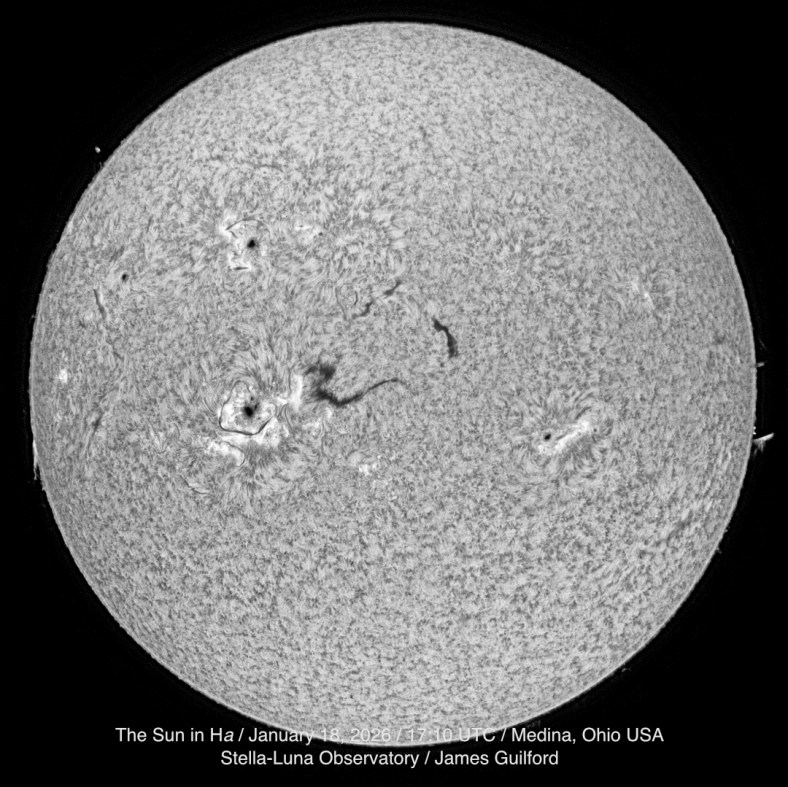
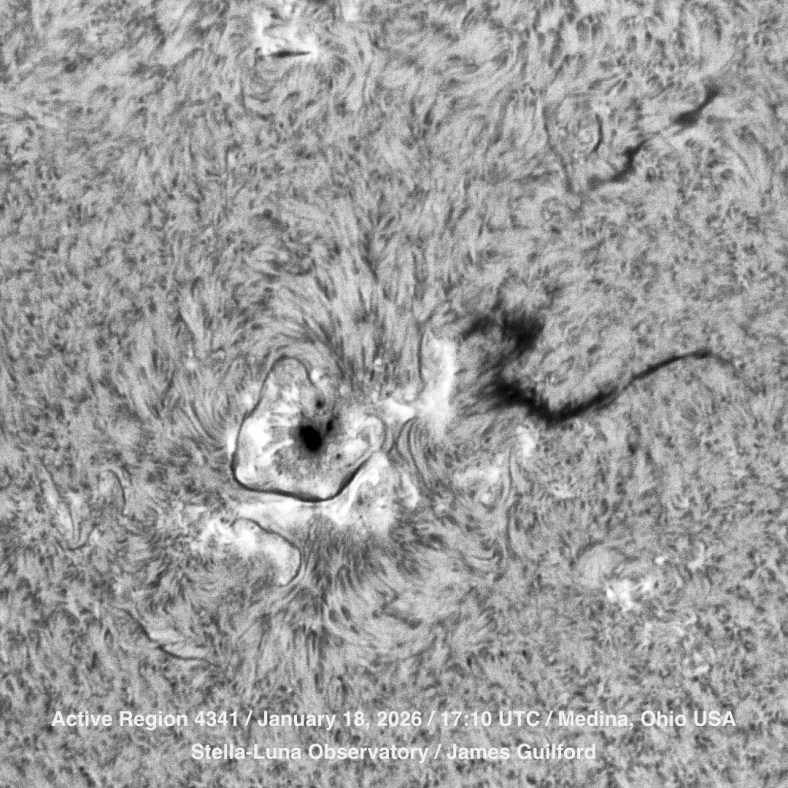
With recent weather, we believed the observatory might be closed until spring. On January18, however, the skies were clear and blue with very little wind. We unsealed the dome, brushed off some of the accumulated snow, and aimed at Sun. The first thing we observed was the presence of large filaments at the center of the disk. One filament, Z-shaped, was in immediate proximity to a large sunspot at Active Region 4341. Also visible were multiple prominences around the disk; Sun is still active! The powerful magnetic forces surrounding AR4341 are made evident by its influence upon Solar plasma — twisting and aligning the visible features like iron filings around a science classroom magnet.
While the sky was clear and blue, the temperature was wicked cold for standing around on stone floors. Also, touching metal telescopes, properly allowed to reach the ambient temperature of 19°F, with bare hands is, painful. The laptop computer also found the temperature uncomfortable for, while its battery was charged to about 60% capacity, the system quit complaining of low battery. Attaching the computer’s charger let us finish the session.
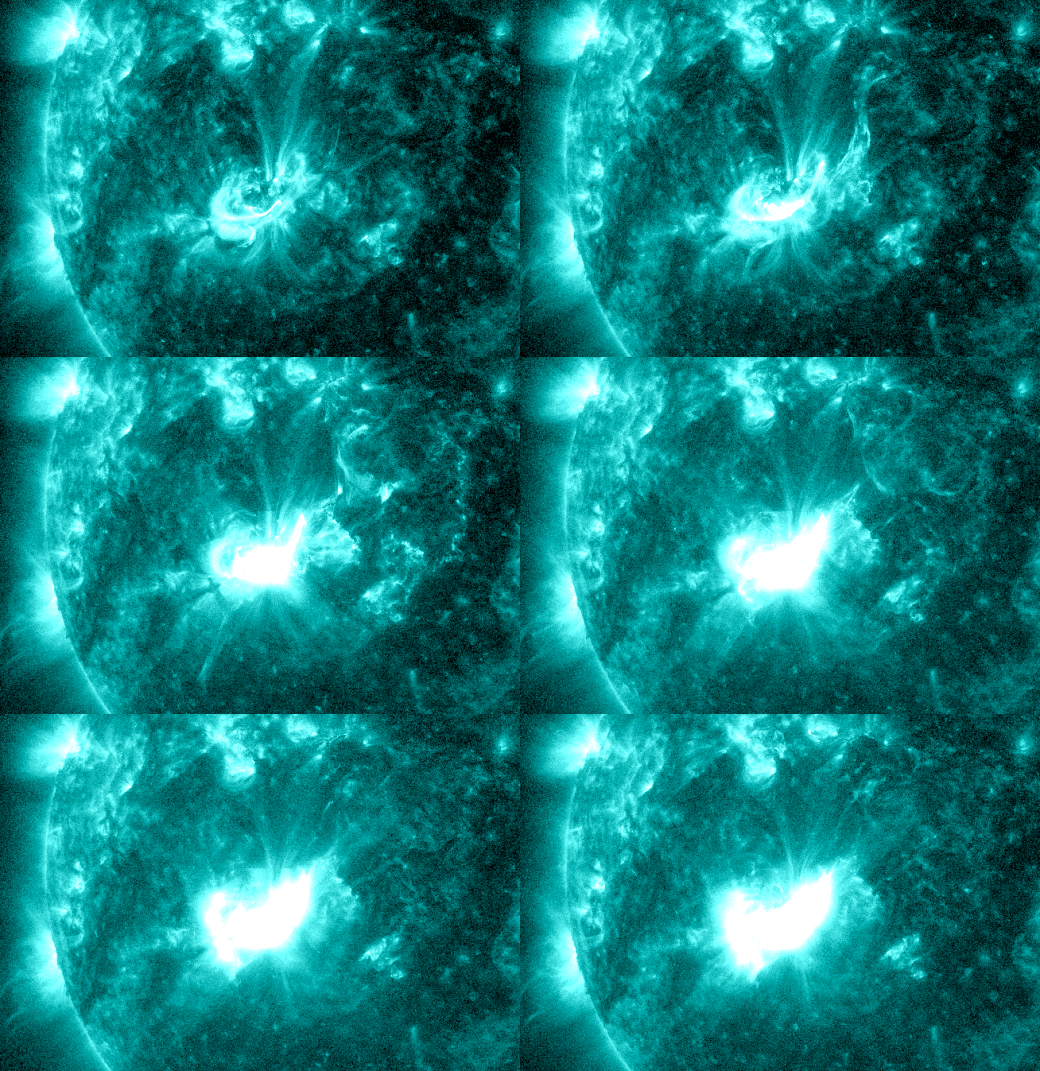
One hour after we recorded the images of AR4341, the sunspot exploded with a massive X1.9-class flare. Expansive auroral displays are expected early January 20 though here, in Northeast Ohio, we are expecting cloudy, winter weather.
 Stella-Luna Observatory
Comments are closed.